Deprecated: Creation of dynamic property quick_page_post_reds::$ppr_metaurl is deprecated in /home/chkvadmi/public_html/wp-content/plugins/quick-pagepost-redirect-plugin/page_post_redirect_plugin.php on line 97

Deprecated: Creation of dynamic property quick_page_post_reds::$pprshowcols is deprecated in /home/chkvadmi/public_html/wp-content/plugins/quick-pagepost-redirect-plugin/page_post_redirect_plugin.php on line 99

Deprecated: Creation of dynamic property quick_page_post_reds::$ppr_newwindow is deprecated in /home/chkvadmi/public_html/wp-content/plugins/quick-pagepost-redirect-plugin/page_post_redirect_plugin.php on line 1531

Warning: Cannot modify header information - headers already sent by (output started at /home/chkvadmi/public_html/wp-content/plugins/quick-pagepost-redirect-plugin/page_post_redirect_plugin.php:97) in /home/chkvadmi/public_html/wp-content/plugins/all-in-one-seo-pack/app/Common/Meta/Robots.php on line 87

Warning: Cannot modify header information - headers already sent by (output started at /home/chkvadmi/public_html/wp-content/plugins/quick-pagepost-redirect-plugin/page_post_redirect_plugin.php:97) in /home/chkvadmi/public_html/wp-includes/feed-rss2.php on line 8
CHKV https://www.chkv.org Canadians Helping Kids in Vietnam Wed, 28 Aug 2019 00:31:16 +0000 en-CA hourly 1 https://wordpress.org/?v=6.5.8 https://www.chkv.org/wp-content/uploads/2016/09/cropped-header-32x32.jpg CHKV https://www.chkv.org 32 32 ULTRASOUND HELPS CANADIAN DOCTOR GIVE BACK TO HER TWO COUNTRIES – Via Sonosite Blog https://www.chkv.org/blog/2019/08/27/359/ https://www.chkv.org/blog/2019/08/27/359/#respond Wed, 28 Aug 2019 00:29:41 +0000 http://www.chkv.org/?p=359 https://www.sonosite.com/blog/ultrasound-helps-canadian-doctor-give-back-her-two-countries

The post ULTRASOUND HELPS CANADIAN DOCTOR GIVE BACK TO HER TWO COUNTRIES – Via Sonosite Blog first appeared on CHKV.]]>
https://www.sonosite.com/blog/ultrasound-helps-canadian-doctor-give-back-her-two-countries

The post ULTRASOUND HELPS CANADIAN DOCTOR GIVE BACK TO HER TWO COUNTRIES – Via Sonosite Blog first appeared on CHKV.]]>
https://www.chkv.org/blog/2019/08/27/359/feed/ 0
Welcome to our New Website https://www.chkv.org/blog/2016/09/03/welcome-to-our-new-website/ https://www.chkv.org/blog/2016/09/03/welcome-to-our-new-website/#respond Sat, 03 Sep 2016 23:00:43 +0000 http://www.chkv.org/?p=104 Thank you for checking out our new website! Our hope is to update this site and the blog with activities, events, and other important information as often as we can. During our Medical Mission in February of 2016 our team took the time to recount the many experiences they had during their time in Vietnam. […]

The post Welcome to our New Website first appeared on CHKV.]]>
Thank you for checking out our new website! Our hope is to update this site and the blog with activities, events, and other important information as often as we can.

During our Medical Mission in February of 2016 our team took the time to recount the many experiences they had during their time in Vietnam.

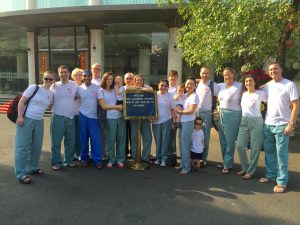
Click the picture to join us at our blogspot website to see their adventures.
3

The post Welcome to our New Website first appeared on CHKV.]]>
https://www.chkv.org/blog/2016/09/03/welcome-to-our-new-website/feed/ 0
A Mission of Love, Hope, and Faith https://www.chkv.org/blog/2016/07/31/a-mission-of-love-hope-and-faith/ https://www.chkv.org/blog/2016/07/31/a-mission-of-love-hope-and-faith/#respond Mon, 01 Aug 2016 02:34:00 +0000 CANADIANS HELPING KIDS IN VIETNAM INCORPORATED – A Mission of Love, Hope, and Faith – THE BIRTH OF CHKV Chau Pham: Co-Founder of CHKV; Director of Missions To help others understand why CHKV was born, I decided to share with you my personal story of running as a five year-old child refugee from my birth […]

The post A Mission of Love, Hope, and Faith first appeared on CHKV.]]>
CANADIANS HELPING KIDS IN VIETNAM INCORPORATED
– A Mission of Love, Hope, and Faith –
THE BIRTH OF CHKV
Chau Pham: Co-Founder of CHKV; Director of Missions
To help others understand why CHKV was born, I decided to share with you my personal story of running as a five year-old child refugee from my birth country of Vietnam, of finally finding a new home in Canada, and of the decisions I have made as a result of my life experiences.


Born in 1978 in the midst of great turmoil after one of the most devastating wars in Vietnam, my parents, in hope of a better future for me, made an incredibly difficult decision to help me escape from Vietnam, a decision that ultimately changed the course of my life.  At age five, I fled my country in the middle of the night and then survived nine horrific days on the South China Sea, to land in a refugee camp in Thailand without my parents. Here I was diagnosed with tuberculosis and subsequently denied entry to Canada when Canadian immigration officers came to interview anyone interested in coming to Canada. Each day as I went to take my medication at the Red Cross station in the camp, I began to see clearly that the doctor treating my TB was holding all the keys to my future.  He had the power to cure my contagious disease, to end my ostracism by everyone in the camp, and to assure Canadian officials that my lungs were clear of tuberculosis. Finally, after almost two years of treatment and long days and nights in this very poor camp, the Canadian government returned to interview more refugees and the immigration officer issued a long awaited permanent resident document that allowed me to come to Canada.


With this life-saving decision by the Canadian government came two very important decisions in my seven-year-old mind that I have never forgotten…

I would do all I could every day to become a doctor helping to improve others’ lives, just as the doctor in the camp had changed mine, and I would never forget that it was the people of Canada who first offered me a new home in their wonderful country with good health care, the education I needed to become a doctor, and a new mom whom I met the day I arrived.


Despite my difficult early years, I had two births, two moms and a dad, so many new freedoms I could have only dreamed of having in Vietnam, and could come away from all of this thinking that life is still beautiful and that it is now my turn to serve to improve the lives of others in Canada and in my birth country as well. My second chance at life and my rebirth in Manitoba, Canada, and a newly adopted mom, provided me with the confidence, the tools, and the opportunities, to attain my profession, and to serve others here and abroad. Becoming a doctor was my way of saying thank you to the generous people of Canada and also as a way to give back to the disadvantaged children of Vietnam that I had left behind.

I realize now that children are not just born from a woman’s womb but also from a big heart. My adopted mom not only opened her heart and world to me but she showed me the meaning of selfless and unconditional love when she made the unimaginable decision to sponsor my family and reunite me with my birth parents and brothers. Growing up with my adopted mom and my biological family gave new meaning to the “modern family unit.” In making the full circle of my life, I returned to Vietnam in 1993 at age 15 with both my biological and adopted moms to see the country of my birth and my humble beginnings. From what I saw then, I could begin to relate to the many underprivileged children who could easily have been myself and who desperately needed those same opportunities for acceptance, good health, a safe place to live, education, economic security, and leadership for better tomorrows.  Canada has many times been selected as one of the world’s best countries in which to live. We therefore as a nation have an immense moral obligation to share our knowledge, our skills, and our wealth with those in so much need. Canada has a reputation for sharing and service and in keeping with my new Canadian identity, our charity, Canadians Helping Kids in Vietnam Incorporated was born in 1995.    

On November 27, 1995, in my new home in Canada, I sat with my adoptive Canadian mom, Darlene Lindsay, and another refugee, Tam Nguyen, from Vietnam, discussing what we could do for the many highly disadvantaged children and families in Vietnam.   Knowing this was to be our focus, we very quickly said let’s just call our charity, “Canadians Helping Kids in Vietnam,” and from then until now we are a registered charity in the Province of Manitoba, with the Government of Canada, and with the Government of Vietnam. My mom Darlene is the Chair of our Board and my mom Thu is now the Director of our Education and Family Support Program, the largest financial component of our work in Vietnam.

OUR CHKV GOALS REMAIN THE SAME

We work every day to:
  1. Offer monthly support for impoverished families trying to provide good health and education for their children
  2. Improve health care delivery in that country through medical and dental missions.
  3. Provide bicycles for students to travel to and from the often-long distances to school.
  4. Respond to emergency requests arising out of natural disasters and other situations.

CHKV has built nine schools in Vietnam to offer educational opportunities for thousands of Vietnamese children, but because health is the biggest factor in measuring the quality of every life, we have also made medical service another big focus of CHKV. Most people in Vietnam are born into a country where daily they experience incredible shortages of everything and it is difficult for children to dream about what they want to be when they grow up, if they need to focus on becoming healthy enough to reach adulthood. If we can help these children to grow into healthy educated adults, the reward for them, and for us, will be the contributions they will some day make to the communities from which they come.

OUR MOST RECENT 2016 CHKV MISSION

This past February 2016, I led another medical team as together we conducted a learning symposium at the An Giang Provincial Hospital in Long Xuyen, Vietnam.  After an initial needs assessment was conducted with the physicians at the hospital, I assembled a team of Canadian specialists to offer lecture presentations on the requested topics, followed by several hands-on clinical training scenarios at skills stations using equipment brought by the Canadian team. The scope of the teaching symposium focused on adult and pediatric trauma and cardiovascular resuscitation as well as obstetrical emergencies, women’s health, and point of care ultrasound.

The Canadian team members volunteering their time and expertise included the following:
Department of Emergency Medicine Faculty:
  • Dr. Chau Pham (EM)
  • Dr. Christian La Rivière (EM)
  • Dr. Dave Easton (ICU/EM)
  • Dr. Lisa Bryski (EM)
  • Dr. Hareishun Shanmuganathan (EM/Peds EM)
  • Dr. Aaron Webb (PGY-5 EM)
  • Dr. Anne Sutherland (PGY-3 EM)

University of Manitoba Faculty: 
  • Dr. Stasa Veroukis (Peds ICU)
  • Dr. Stephanie Johnston (Obs/Gyn)
  • Dr. Joanna Webb (CCFP)


Shock Trauma Air Rescue Society (STARS):
  • Brent Bekiaris (ACP)
  • Sarah Painter (BN)

Victoria General Hospital Nurse & CHKV Administration
  • Darlene Lindsay (CHKV Admin)
  • Thu Pham (RN)
  • Tieng Pham (CHKV Volunteer)

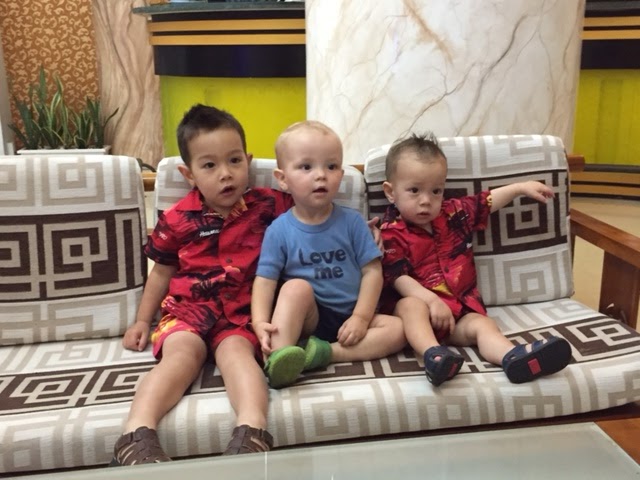
Our paediatric ambassadors

  • Louie Webb
  • Gabriel La Rivière
  • Sébastien La Rivière

The local hospital in the City of Long Xuyen, Vietnam, with the support of An Giang province, invested in Telehealth in order to allow rural physicians in the province to learn from our presentations and to observe the various simulation codes. Throughout the two-week mission, approximately 130 Vietnamese physicians from across the province were actively involved in the symposium, and many more were most appreciative of the valuable learning experience available through Telehealth. The teaching symposium was approved by the Minister of Health in An Giang province and participants were expected by their local team lead, to partake in a pre and post test process with formal evaluations arising out of the learning objectives presented by the Canadian team. At the end of the symposium, the Canadian team donated the majority of the medical equipment it brought to the hospital in order that local physicians could sustain their learning and education. Of the four medical missions in Vietnam in which I have been involved, feedback from the administration and physicians in Vietnam, and from the members of the Canadian teams which participated in earlier missions, indicated that the hands-on learning and the relevant presentations in both English and Vietnamese resulted in the highest levels of new learning during this 2016 mission.
At the same time the charity was operating the medical symposium, it also delivered on some of its other CHKV projects.  Members of the Board of CHKV and all of the medical mission team presented each of 100 students in Vietnam with a new bicycle to facilitate attendance and encourage effort at school.  As well, the CHKV mission team presented six months of financial support to another 100 families approved under CHKV’s Education and Family Support program.  For a low-income family to be approved for this ongoing monthly support, at least one child in the family must be an active student in a school in Vietnam.

Although the hectic schedule of the mission was intense for the team, physical exhaustion was quickly replaced with sheer joy and exhilaration. Along with the exuberance that came with the new learning experienced by the Vietnamese physicians, came many more very emotional moments including when the team witnessed the young students riding off on their 100 new bikes, and when a very grateful parent or guardian received a year’s financial support for their child’s education. The team also had the opportunity to visit three very impoverished families in their homes and this insured for the charity and for the Canadian medical team that their work and the support of Canadian sponsors was definitely most worthwhile and greatly appreciated.

A TRUE PRIVILEGE TO SERVE WITH MUCH GRATITUDE
I am a product of the accumulated generosities of others who have helped me along the way from a malnourished and sick refugee child to the woman that I am today. With this group of supporters, I have been given the privilege to serve my patients in Manitoba, and to serve along side my fellow humanitarians who contribute to the success of Canadians Helping Kids in Vietnam as we work to improve the lives of some of the world’s poorest children and their families. Now as a blessed mom to two loving boys, I hope my life example may help to encourage our sons and other young people to pursue their own unique dreams, and to find the pillars of support required for their journeys.  I believe that wherever and in whatever capacity we serve others, we can accomplish a great deal to raise the quality of life and to fill lives with the promise of a better tomorrow.

To our fellow Canadians, first of all on a personal note, thank you for welcoming me to Canada and for all the opportunities you as a Canadian, have provided for me to reach my own goals. In any personal journey, one requires the support of many others, and this is so apparent when I look back on all who have walked and still walk with me daily.  I would not be here today without my parent’ sacrifice to help me flee Vietnam, without the opportunities provided by my Canadian mom, without the daily support and unconditional love of my husband, my family, my medical colleagues, my friends, and the many Manitobans who have supported our charity’s work in Vietnam as donors, fundraisers, family sponsors, mission team players, and more.

Thank you as well for the tremendous support you have given to CHKV, by attending our fundraising events to help us build schools, by sponsoring desperate families in Vietnam, by donating funds to our Biking on a Child’s Future campaigns, by supporting our medical and dental missions to improve health care delivery in Vietnam, and by responding to emergency needs in that country. Thank you as well to those who have donated your skills, products, and financial resources to help us in our work in Vietnam and here in Manitoba.
The success of this 2016 mission and of CHKV’s work over the past twenty-one years would never have been possible without the tremendous supports so willingly provided by so many individuals including each team member who covered their own travel costs and all of the generous donors who made it possible for the team to bring back medical equipment for teaching. Throughout the mission, the charity and the medical team participants knew that no work could ever proceed without the tremendous support offered by generous individuals and organizations in Manitoba and Canada. We were all very proud to be Canadians doing our part to offer never-ending support for the less fortunate in so many far off corners of our world!

All of us at CHKV are well aware that we could not have done what we have in Vietnam, without you. It has been an immense privilege to serve with you. In service we stand together, as CHKV and all of you have been honoured in our work for others.

Chau Pham, MD
CHKV Director of Missions, Team Leader Medical Mission 2016
ACKNOWLEDGEMENTS:

  • 2016 Mission Team Members (as listed above): Thank you for taking that leap of faith, love, and hope, to follow me across the world in order to share your compassion, knowledge, and skills with those much less fortunate.
  • Our mission team blogger extraordinaire, Sarah Painter, for giving life and permanence to our mission experience through your creative writing and memoirs.
  • Our mission team photographers, Christian La Rivière & Dave Easton, and camera man, Quoi Huynh, for this beautiful keepsake that will be forever cherished.
  • CHKV charity board members: A true privilege to serve alongside all of you as humanitarians to raise the quality of life and to fill lives with the promise of a better tomorrow.
    • Chair: Darlene Lindsay
    • Honourary CHKV Ambassador: Tam Nguyen
    • Vice Chair: Thu Pham
    • Secretary: Signe Jewett
    • Treasurer: Melanie Ngo & Kim Vo
    • Director of Missions: Chau Pham
    • Director of IT Services: Christian La Rivière
    • Director at Large: Trinh Nguyen
    • Advisory Committee: Jeff Bharma & David Binda
  • CHKV supporters and family sponsors over the past 21 years: you are the lifeline of CHKV

Special mentions:

  • The An Giang Retirement Teacher’s Association & Thanh Nguyen for your generous commitment to helping CHKV with our work in Vietnam
  • Michael Dunbar and Darlene Lindsay for the generosity of their time in proof reading our reflections
Donors for the 2016 mission: Without your support, this mission would not have been possible.

Department of Emergency Medicine
University of Manitoba Sim Lab
STARS
Sonosite Canada
Health Sciences Centre Foundation
Bayview Construction
Making Roots Montessori Inc.
Errol & Grace Fitzell
Raymond & Matilda Rempel
Cheryl ffrench & Chris Sathianathan
Marilynne S. Keil
R Ludba
Donna Clark
Barbara Poustie
Faisal Siddiqui
Dale & Hien Warkentin
Pearl Toews-Neil
Ryan & Rosalind Toews
Hanh & Franz Rempel
Ken & Carmel Wiebe
Sherrise & Hung Trinh
Jon Bellas & Hang Trinh
Douglas  & Sheryl Klassen
Hong Penner
Joel Nkosi
Alan Mart
Thanh & Te Trinh
Randy Guzman
Bryce Makar & Deb Evaniuk
Rick & Gladys Derksen
Wes Palatnick
The post A Mission of Love, Hope, and Faith first appeared on CHKV.]]>
https://www.chkv.org/blog/2016/07/31/a-mission-of-love-hope-and-faith/feed/ 0
The Parallel Universe – reflections on the hosptial https://www.chkv.org/blog/2016/07/28/the-parallel-universe-reflections-on-the-hosptial/ https://www.chkv.org/blog/2016/07/28/the-parallel-universe-reflections-on-the-hosptial/#respond Fri, 29 Jul 2016 04:15:00 +0000 Thoughts from Vietnam By: Anne Sutherland Walking into the hospital in Long Xuyen was a different experience than walking into a hospital in Winnipeg. The open-air hallways were crowded with seats for waiting patients who looked over our group with curiosity. The emergency department was a small room packed with stretchers. People lay directly on […]

The post The Parallel Universe – reflections on the hosptial first appeared on CHKV.]]>
Thoughts from Vietnam
By: Anne Sutherland

Walking into the hospital in Long Xuyen was a different experience than walking into a hospital in Winnipeg. The open-air hallways were crowded with seats for waiting patients who looked over our group with curiosity.

The emergency department was a small room packed with stretchers. People lay directly on the cold metal, with not a mattress, pillow, or blanket in sight. It seemed to lend a sense of urgency to each patient – there was no time for comfort; people are sick! At one end of the room were a series of desks where the emergency staff tended to paperwork. I wondered to myself what their triage system was, as I never saw a tracking board of the patients currently being treated or waiting to be seen. Even without a visible system, patients were seen quickly as they walked in or were carried by family. Vitals were taken along with a brief history and physical exam. The staff moved around us in order to get tasks completed. We were visitors in their house.


The ICU was full each day we visited, with what seemed to be an entirely different group of patients. It appeared that patients declared themselves quickly, in one way or another. During our time, there was only a small number of patients who remained in the ICU for more than a few days. Health insurance in Vietnam exists, however only for the young, the elderly, or those with money. For the rest, they must pay for treatment, which can be too expensive for some families. I couldn’t imagine making a decision to withdraw care based on how much a family could afford, which was a reality for many of the families we saw in the ICU.

General Tour 

On our second day of the mission, Hareishun, Stasa, and I were taken on a tour by one of the physicians. Our tour of the hospital included the outpatient clinic department, the pediatric wards & ICU, the emergency department, adult ICU, stroke ward, tuberculosis ward, pre-operative holding room, operating theatres, and post-operative ward. I was struck by how large the hospital was.

The multiple buildings seemed to be bursting at the seams with patients and families.  Patients on stretchers in hallways were accompanied by multiple family members, many of whom seemed to be carrying thermoses and bags of cooked food. It struck me that this was not much different than the hallway medicine that many hospitals in Winnipeg have been struggling to rectify for many years. This was coupled with the knowledge that the residents of Long Xuyen had a brand new hospital that would soon be operational – set to open the week after our team would be leaving. The next CHKV mission will be able to see the new hospital in full swing.

Speaking with the members of the previous mission in 2011, most have remarked that much has changed in Long Xuyen since that time. More people, new buildings, and more businesses line the streets of the city. It will be interesting to see how much will have changed between 2016 and the next mission. I can only imagine how much more the city will have progressed, let alone the delivery of health care in the brand new hospital.


Intensive Care Unit 
By: Dave Easton

Looking back at what was my second visit to Vietnam and An Giang General Hospital, I was reminded about how warm and friendly the Vietnamese people are.  I felt like I was kind of coming back home and being reunited with my extended family.  People are people no matter where you go in the World.  The ICU team do their best with limited resources that make us from North America cringe at the thought of not being able to provide the kind of care and interventions we are used to in our day to day practices, yet they make it all work.  You can always learn from others, and one thing that stands out in the health care system is the importance of family in all aspects of care.  We are just now in North America focusing on patient and family centred care, but we could learn a few things about how family can help care for patients as they do in Vietnam.

I look forward to the next “family” reunion!

Palliative Care in An Giang Hospital 
By: Joanna Webb
I felt fortunate to be presented with the opportunity to join the 2016 CHKV medical mission, although I was very aware that I lack the acute care skills that the majority of my colleagues have.  Being married to an emergency medicine resident was my ticket in, but I worried about what I, with my background as a family physician who also works in palliative care, could bring to the table.  The offer of a palliative care lecture was declined during the needs assessment with our receiving team, so instead I focused on women’s health, another area of personal interest and one which was in high demand.

On the second day of our conference a small group was taken on a tour of the hospital.  On that tour, we came across the oncology ward that I recognized would be the closest I would come to finding a palliative care unit.  I had the opportunity to return to the ward with Christian La Rivière, a fellow palliative care physician, along with a translator on two subsequent occasions and have been able to develop a bit of understanding of palliative care, or the lack of it, in Vietnam.


The ward was busy with patients overflowing into the hallway.  Despite being crowded it was not chaotic.  In fact, the ward was very quiet with patients either sleeping or resting and there was very little talking.  Nurses were busy administering medications and many patients had family members at their bedsides providing personal care. There was mold on the walls and ceiling, water dripping being collected into buckets and no evidence of a bathroom or shower for the patients.  Hand hygiene was essentially non-existent and patients receiving chemotherapy were in communal rooms with others admitted with infections. Despite being run down, the floors were clean and there was no odor. 

There was one oncologist managing the ward comprised of roughly 35 patients.  He came across as busy and overworked.  His day consists of rounding on his patients in the morning, followed by admitting and charting on new admissions, ordering and reviewing tests and creating management plans.  It appeared that patients were either sent from emergency or outpatient clinics with a presumed diagnosis of cancer that needed work-up, were receiving chemotherapy or were admitted for symptom management.  It seemed as if patients went home if work-up was complete and no further interventions could be offered, if symptoms improved, or if patients ran out of money and could no longer afford to be in hospital.  He emphasized that patients didn’t want to die in hospital so if end of life was near they would go home to die.


The cultural differences in patient care were acutely apparent when we joined the oncologist on morning rounds.  There was essentially no dialogue between physician and patient; no discussion of results or management plans.  To be fair, these discussions may occur later on in the day once rounds are over but I suspect medicine remains very paternalistic where the doctor decides and the patient follows suit. Objective findings such as bleeding or vomiting were treated with blood transfusions and nasogastric tubes but subjective symptoms, such as pain or nausea, were not addressed.  If a patient were to mention a symptom it was glossed over and seemingly not treated.  Despite the lack of apparent symptom management all the patients appeared comfortable and not overtly distressed.  No one was grimacing with pain, working hard to breath or obviously delirious.  Perhaps the culture here is to suffer in silence.

The majority of patients on the ward had widespread cancer that is not curable.  Back in Winnipeg these patients would be enrolled in the palliative care program, gaining access to homecare, nursing and physician support at home.  If symptoms or patient care were to become unmanageable, admission to a designated palliative care unit could be arranged.  No such services are available in An Giang, however this is the norm with no expectation for comprehensive palliative care.  Patients want to die at home and palliation during the final days of life is the responsibility of family.

I got the sense that palliative care is seen as the management of patients who are actively dying, rather than a philosophy to be introduced earlier on in the disease trajectory.  With family members caring for patients as they die out of hospital I felt there was the impression that palliative care was not a needed medical subspecialty.  I would argue that nearly all the patients on the oncology ward would have benefited from palliative care – to fully explore and manage symptoms and to discuss prognosis and goals of care.  True, access to resources is limited compared to Canada but they are not non-existent.  I came away with the impression that a lot could be taught surrounding a clinical approach to pain, trouble breathing, nausea and delirium, as well as patient centered conversations at the bedside.  However, I wonder if the desire to expand this skill set is currently present.


In 2005 Vietnam’s Ministry of Health launched a palliative care initiative that worked to increase accessibility to morphine and create a one-week and three-month training course in palliative care.  However, a long term plan for the implantation of palliative care with ongoing advocacy and education around opioids along with sustainable training programs has yet to be established. The need for palliative care with collaboration between hospital and community services has been identified but not yet addressed.  For the time being, death and dying in the province of An Giang will remain in the domain of family; a non-medicalized natural event in everyone’s life cycle.  I just worry that without a palliative approach the days/weeks/months leading up death aren’t being addressed, which I personally feel represents a large gap in patient care. We are fortunate to be at the receiving end of a Canadian health care system. There is no doubt that the physicians I worked with in An Giang are eager to learn new skills and knowledge and this gives me hope that palliative care will gain traction to become a standard of care for patients in the near future in Vietnam.

Pediatric Intensive Care Unit
By: Stasa Veroukis

I have had quite a few people ask me about my trip, so I thought I would share something I wrote while in Vietnam, and I believe will be shared on the CHKV blog. It was written in one sitting; it’s a little off the cuff. Writing was never my forte, so apologies in advance if my grammar is off. 

The PICU in Winnipeg is my second home; well, actually sometimes it feels like my home. I can feel that comfortable in the PICU and the people I work with feel like family. I have flown thousands of kilometres to the city of Long Xuyen in Vietnam, for a medical mission with the organization CHKV.  This is my second time here. I have seen the PICU of An Giang Hospital before.  I remember walking through it with the other doctors and nurses who travelled with me in 2011.  It is a room roughly 30 by 40 feet. There is no way to isolate patients from each other; it is one big open room. There are roughly 12 beds and about 6 beds for neonates. There was a sewer trough passing several feet in front of the main entrance. Every morning I was greeted with a waft of sewer smelling air.  Inside, no A/C, and the air does not move within the room apart from the air set in motion from family members’ paper fans. The small beds have inch-thick mattresses on metal frames. A family member is seated on the bed of each patient, taking up more space on the bed than the patient. The parent is responsible for providing food and for feeding the child. They fan their child to keep them cool and swat away flies. Children over 6 years of age are not covered by government funding. That’s right, they pay, unless they have insurance. Insurance would be unaffordable for many here. Everyone in our group notices and feels something when they see a grandmother hand-bagging her grandchild. This baby required intubation and mechanical ventilation, but a ventilator was not available. Baby would have to wait for another patient to be extubated in order to get a ventilator.


So this is where I was coming to visit again. The sewer trough was now covered by metal sheets, and so I was spared its smell in the air. The doctor I was working with apologized for the A/C not working. The heat never bothered me (my blood is Mediterranean after all), but it is possible the heat could affect the patients.  We started walking through the beds of the PICU, the physician explaining the diagnosis for each child: meningitis in one toddler; diarrhea in an infant; hypertension of undiagnosed etiology in a young teenager who was to be sent to Ho Chi Minh City in the next couple of days for further work up. He came in to hospital with headaches, and was admitted several times in the past for the same thing. There are only two monitors beeping away in this PICU. The nurses do not position themselves at the bedside but at the nursing desk. There are one or two babies on nasal prong cpap. Two ex 28-weeker twins, now 32 days old, are the last patients we see. They managed to get off CPAP and oxygen and are managing oral feeding too – two cute little babies, lying still under their blanket looking adorable in their toques; mama and grandma standing by on guard to meet their every need. These babies were lucky. I learn there are 3 ventilators in the unit, but one is not working. Two ventilators, looking a bit old but working, and that’s all that matters. The defibrillator looks pretty old too, but it works.  They will be getting 2 more ventilators from the adult ICU stock of ventilators.

The intensive care unit has 8 patients today, none intubated, one on CPAP. This province has a population of nearly 2 million people. Manitoba has a population of one million people. Our acuity seems higher and our census is usually 6-10 patients. How is it there is no septic patient here on inotropes? A trauma patient? Renal failure patient? Severe asthma, allergic reaction, seizures, first time diagnosis of cancer? I ask this question to the attending physician. In the case of sepsis, they often arrive too late. The hospital services a largely rural population. There are no ambulances. The sick are brought in by family members using the ‘family car’, known here as the moped. They come from afar, precious minutes and hours pass before entering the hospital before they can get help. Trauma patients are seen and taken care of by the attached adult hospital. Sicker children likely get transferred to Ho Chi Minh City.

I may be wrong, the sentiment perhaps lost in translation, but I feel the doctor was apologetic. But I do not know why. She and the doctors who work with her are very hardworking and dedicated. They are doing their best with what they have. And if you are doing everything you can with what you have – your training, your experience and your equipment, – then it is the best you can do. There is always room for improvement, and where there is a will there is a way.


The will is definitely here. 


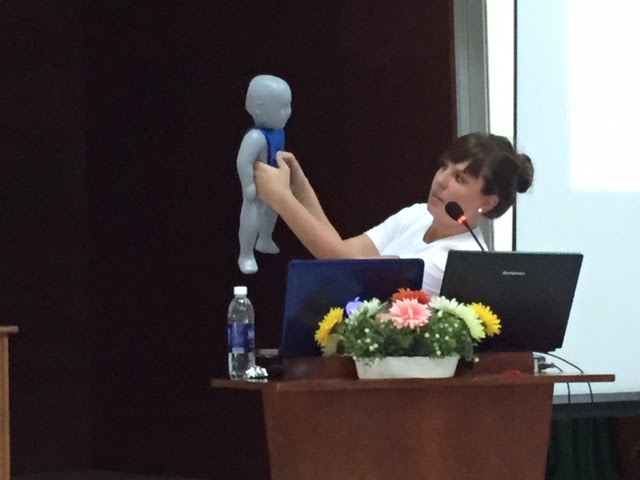
That is what I see every day when we do our afternoon sessions: the simulation extravaganza! And truthfully, our simulation sessions feel quite a lot like the street markets here. Just a little out of control, but still keeping on task and a whole lot of fun!  The simulation I run in Winnipeg runs as a 20 to 30-minute-scenario where reality is suspended and residents humour my whims by pretending the mannequin is a real child. They work as if in real life; to save the sick child whose disease and its course were designed in my head weeks before, or sometimes the night before. In Long Xuyen, simulation runs a bit differently.  Reality and time are constantly suspended and interrupted, as this sim is done through interpreters. We both are learning. I am understanding how one practices in a resource-limited country and reflect on my own practices. Do I really need all this blood work? Does my patient really need monitoring?  I am working with Dr. Hareishun Shanmuganathan and we have two scenarios for them: one sepsis and one trauma. In the world of simulation, we are doing it as low fidelity as it gets. One pediatric intubation head and one ‘space baby’ mannequin is all we have. So that our intubation head looks like it belongs to a body, I suggest we draw an infant body. From several pieces of paper towel, Hareishun draws out the body, with hip and right arm injuries in place. Vitals and changes in course are given to the participants as one does in good old paper cases.


After lots of hand gesturing and group handling of the leader role (what else would you expect from 5 to 8 doctors all trying to run a sim case? :), the case ends successfully. And then my favourite part: the smiles, the clapping that is the applause for a job well done, and the mutual appreciation of what was just shared, what was just understood from both sides.  Because of the language barrier, the smiles we share have so much meaning. Respect and appreciation. We are moving forward, together.


Smiles. The power of a smile is huge, especially in the absence of a shared language.


I pass by people walking in the streets, in the hospital, and in our van as I sit by the window looking out at the families on mopeds. I can’t help but smile at the moment of eye contact. I am a visitor here after all, and I appreciate the welcome we have received from the hospital staff, and the people of Long Xuyen. The smile exchange feels like a handshake. We are different but the same, and I wish I knew Vietnamese. I yearn to know what your life is like, and your views on life.

Homes. I think everyone has one here. In Long Xuyen I have not seen a homeless person or a beggar, although of course they may exist and I have not seen it. Many live in homes of corrugated steel with no running water. My parents grew up in post WWII Greece. Running water was a luxury. My father grew up poor in a small city, yet he describes his childhood as a good one, with lots of fond memories. There was not a lot of food but his five siblings and he would spend their free time teasing each other, playing and listening to stories.  My father cherishes the time spent this way, connected to his family.  Maybe I am wrong to think this way, but is it the same here?  Poverty yes, hunger yes, but are people more connected to family and their friends, to their community? I don’t know. 

My mind recalls one of Bono’s lyrics, “A House doesn’t make a Home” (from ‘Sometimes you can’t make it on your own’). I think that’s what my dad’s experience was like.  ‘Home is where the Heart is’, I think that’s what he was describing. I would wish that kind of home, ‘where your heart is’, for everyone.

Thank you doctors and people of Long Xuyen for giving me the opportunity to work and live alongside you.

Last one from Bono. The song ‘Crumbs from your table’ was running through my mind during a part of this trip:

‘Where you live should not decide
Whether you live or whether you die’


And for those who know me well, believe it or not, I do listen to other bands/musicians besides U2 😉


Obstetrics
By: Stephanie Johnston

During one of the first mornings we were here, I had an opportunity to tour the hospital with some colleagues and obtain a bit more perspective of local practice.  Their OR facilities are on the second floor and situated on the opposite side of the campus from the labour floor.  All the caesarean sections are performed in the OR, as there is no OR attached to the labour floor.   During our tour, a baby could be heard crying down the hall, fresh from the womb.  Continuing our journey across the campus, we eventually made it to the OB emergency/delivery area.  It is a very humble facility where deliveries occur in a communal delivery room with 5 or 6 birth tables facilitating lithotomy position.   A surprising sound for me was to hear the familiar “Thumping” of a fetal heart rate monitor.  I was definitely not expecting to hear that comforting sound or to see the two women who were actively labouring being attached to monitors.  Their labour room is definitely a change from home, where nurses are usually abundant, an OR is down the hall and the luxury of anaesthesia is merely a phone call away.  It is very difficult, and almost guilt-inducing in a way, to explain the luxuries we have at home when comparing the two facilities.  The concept of a crash C/S is definitely a foreign concept as the woman would need to be transported from one side of campus to another on a rickety metal stretcher (similar to an OR table,) a decent 10 min transit time.    On their antepartum unit, the ticking of another fetal heart greets us as a woman with severe preeclampsia at 25wks is resting in bed.  I did try to learn what her clinical course/plan would be and was unable to get a clear answer.  She was being treated with methyldopa, but that is the best I could elicit.  I am very uncertain how her case would be managed as she is quite preterm and the neonatal facilities are very limited at best with the age of viability being around 28 weeks.    
Overall, my experience so far on this journey has been somewhat as expected and informative.  It has definitely driven home the point of needing a proper “Needs Assessment” prior to commencing any educational intervention.  Trying to accomplish this assessment has become the new challenge for future missions.  It would be interesting to see the curriculum for the year long OBGYN residency program offered within Vietnam, as this could help drive future educational interventions.


Watching the rest of my colleagues present on the BLS, ACLS and ATLS/PTLS, helped to highlight some of the challenges I was experiencing, as many of their topics are driven by protocols and algorithms.   It definitely helped to facilitate structure, but trying to convey the concept of multitasking and following an algorithm concurrently was challenging and compounded by the language barrier.   It is quite inspiring to watch my teammates run daily afternoon simulation scenarios depicting ACLS, ATLS and PALS.  The Vietnamese students were crowding around to film with their phones/tablets to capture the high yield moments. It has definitely showcased a great way of teaching locally.
Coming to the end of the mission, I have been able to build up some relationships with the OBGYN department.  Today has been highlighted by some opportunities to attend the department’s OR and a local private hospital.   Getting ready to attend a semi-urgent caesarean section was a bit of a comedy.  I am learning that I am a bit taller and bigger in the hips than most Vietnamese women.  We ended up going through a few scrub changes to find some that “fit”.  In addition, the pants were more of a Capri as they ended halfway down my calf.  Seems as though the problem of “expecting a flood” persists here too.  We needed to change our shoes to dark blue Crocs to walk from the change rooms to the OR rooms.  At this point, we needed to change our shoes again to light blue Crocs.  It definitely showcases their efforts to maintain a sterile environment within the surgical corridor.  I was impressed that they let me wear my own personal scrub cap instead of the bright, green cloth ones provided.   Within the corridor, there were several OBGYN staff milling around.  I felt like I was a bit of an anomaly or possible celebrity as the students I had been teaching all week were following me around with Dr. Hieng.  In the first OR we visited, they were finishing a surgery to remove a large renal stone from the renal pelvis which was causing bad pyelonephritis.   You know it is a bad situation when the gynecologist can see the stone on an old school abdominal x-ray.   From this OR, we moved to the C/S.  It was remarkable to see how many similarities exist between here and home.  The best I could figure was that she was having her C/S due to being 38yrs old (old in their minds), being term, and having ruptured membranes for 6+hrs.  It appears that no efforts are made to try and induce labour here.  Anaesthesia used spinal anaesthetic for her surgery; unfortunately I was unable to see the drug choices used.  Once it was complete, she was placed in the supine position without a left lateral tilt.   When I asked about a wedge, it seemed to start a buzz in the OR and perhaps it is a normal practice that was forgotten or a new, novel idea.  The remainder of the case was very similar to home, but their instrument tray consisted of significantly fewer instrument choices.  There were no Kochers or Green Armitages, but it mainly consisted of Kelly clamps, haemostats or Snaps, a pair of Debakey pickups, a needle driver and one pair of Mayo scissors.  They do not perform a bladder flap and were quite concerned about bleeding, which is their reasoning for not performing it.  Entry into the uterus was very similar, with the baby crying shortly after delivery.  I didn’t even think to look if it was a boy or a girl.  A significant difference here is the lack of a partner in the room to support the mother or having the mother and child reunited for skin-to-skin after delivery.   Once the cord was cut, the child was whisked away by the circulating nurse.   It was interesting to watch as they closed the uterus and incisions.  They did do a two-layer closure on the uterus and were concerned about closing the serosa.  Additionally, there seemed to be limited concern for the bladder.  They were quite adamant about closing the peritoneum and re-approximating the rectus abdominus.  The fascia was closed in a similar fashion.  They re-approximated the scarpa’s and subcuticular adipose tissue.  The most interesting thing I noticed from today was how all ties were instrumental and very rarely do they perform any hand ties.   Additionally, the surgeon would place the sutures but the assist or scrub nurse would perform the ties and they would always use a Debakey or snap to hold the knot during the process.  I am uncertain why they perform their knots in such a fashion.  I think it may be for suture conservation or perhaps for personal safety, as everyone was wearing either glasses or safety glasses.  Their skin closure used a synthetic, monofilament suture similar to biosyn or monocryl with a subcuticular stitch; however, the knots were always placed above the skin and not hidden like I would do at home.  Skin prep consisted of being washed with soap and water, followed by an iodine prep.  It was good to see that they did use the iodine to prep the vagina as well.  Monitoring was limited, with mainly an automated BP cuff and O2 sat probe.  There was no electronic monitoring of the heart rhythms.  A new technology experience I had was how the surgeon, Dr. Ttuc, continued to wear his Bluetooth ear piece throughout the surgery.  Fortunately, his phone did not go off during the case, but I am uncertain how this would have been managed intraop.  Throughout the surgery, Dr. Hieng would regularly ask me questions about how the procedure in Canada compared to their procedure.  I was quite impressed by how similar their technique is compared to home.


Once this case was completed, we proceeded to the emergency OR where they were preparing a woman for surgery due to a ruptured ectopic.  She was apparently transferred from a district hospital, where she had received blood to stabilize her.  Their method for diagnosis seems to be based upon clinical symptoms, a positive BHCG, an ultrasound and maybe a diagnostic peritoneal tap.   Her clinical picture pre-op was quite stable with a heart rate of 80 to 100 and a BP of 115-130/70-80.  She was slender and you could convince yourself that her abdomen seemed slightly distended.   She received a general anaesthetic, becoming quite tachycardic post-intubation, suggesting that she may not have been as deep as would be done at home.  Within a couple of minutes, her heart rate settled down to 70 to 80.  The skin prep was the same as for the C/S.  The surgeon, a lovely female, proceeded with a small pfannenstiel incision and progressing via sharp entry into the peritoneum.  The familiar site of clot welling up through the incision was treated with scooping and suctioning it away to localizing the offending tube.  She quickly packed the bowel away to find the left fallopian tube where an evident ruptured ectopic covered with old clot was clearly visible.  She efficiently used a similar technique to home, double clamping along the mesosalpinx and using a standard tie.  It is fascinating to see that the surgeon places the stitch and the assist or scrub nurse performs the tie, ensuring that someone always holds the knot with either the Debakey’s or snap.   Within the same OR, they did have some old school laparoscopic equipment that would rival the era of R2D2 and they did mention that they would normally perform the salpingectomy for an ectopic laparoscopically if there were less blood loss.  Overall, my OR experience has been quite informative and insightful to see the multiple similarities between Canada and Vietnam. 


Yesterday, I had the opportunity to visit the private hospital, Hanh Phuc An Giang General Hospital.  All I can say is WOW.  The discrepancy between public and private care was very distinct.  A Toyota Camry with a leather interior came to get me, along with the translator Phuong.   Upon arriving at the hospital, it felt like I was walking into a high-end hotel.  The admissions area was lined with multiple clean, white leather couches with a modern black and white background on the walls.  The floors had multiple sticker footprints directing patients to their desired destinations.  The rooms are mainly double occupancy, but it truly felt like I was walking through the halls of a hotel.   Every so often, a used food tray, similar to airplane food, would be seen sitting on the floor beside a door.  My escort was quick to explain that visiting the private hospital provided additional perks.   One difference that was apparent was the lack of family members sitting and waiting in the halls to see loved ones, as they were allowed to stay with their loved ones in their rooms.


Proceeding from the halls of the inpatient wards, we wandered over to the labour floor.  They have a lovely early labour or obstetrical triage area that is air conditioned, providing a reprieve for the labouring mothers from the heat throughout the hallways.  Once they reach 4 to 5cm, they are moved via a private hallway at the back of the triage to either the OR or delivery room.  The delivery room is bright and clean with pink paint and bunny rabbit wall paper covering the walls.  There are about 7 or 8 delivery stations separated by privacy curtains.  They have a large medical cabinet stocked with a multitude of drugs including implanon and digoxin.  They do have doptones and fetal monitors available for use for monitoring.   A metal fetoscope can still be seen in the tray beside the fetal monitor suggesting that some old school skills still exist.  Moving from the labour room to the VIP labour room was a very eye opening experience.  I felt like I was in a suite at another hotel, considering the room had a sitting area, resting bed, labour/delivery table and a fully functional bathroom with shower and bathtub.  There was even a flat screen TV mounted on the wall.  This room significantly surpassed the available ward rooms at the Women’s Hospital or St Boniface Hospital.  It definitely made me envious and looking forward to the new Women’s Hospital in Winnipeg that will allow for more private rooms that don’t have paint peeling off the walls.


The labour floor has a dedicated holding area for anaesthesia and they have four available ORs for the labour floor.  The doors are hermetically sealed with sliding doors, a digital clock with distinct red lights and a temperature monitor is placed at the top of the wall, similar to home.   I think the ORs were even bigger than the ORs I use at home allowing the team members to easily move around.


Upon leaving the hospital, my curiosity started to get the better of me and I started asking about the pricing of the hospital.  Apparently, the pricing for medical care is controlled by the government and private care can only have a markup of up to 15%.  The price I was quoted for a standard vaginal delivery was 5 million Vietnamese Dong or $333.33 Canadian.  If you want the VIP experience, it would cost 20 million Vietnamese Dong or $1,333.33 Canadian.  The difference in comforts is definitely apparent.   I kept commenting on how beautiful the hospital looked and my host was very adamant in explaining that it is not just a beautiful hospital.  There is a higher expectation of their staff.  The physicians are expected to be Level 1 or Level 2 trained and to be continuing to pursue further education.  The standard almost reminded me of the expectations within a teaching or university hospital.  Being the advocate for women’s health, I had to ask how easy access to abortion care is at their hospital.  It became clear that the sensitive nature of the topic existed in Vietnam too.  She quickly answered that her family did not believe in abortions and due to the ethical reasons, it was not offered.  The awkwardness within the car was palpable and I quickly tried to redirect to a new topic of conversation.  Similar to the atmosphere that has been generated with the pharmaceutical companies, I could see the same effect happening when dealing with the representative from the private hospital.  She started highlighting how the private hospital would like to host the symposium as their physicians are unable to attend the symposium at An Giang Public General Hospital.  I almost felt like she was trying to sell me on her hospital as she highlighted that they could deliver more services.  She even made a detoured stop at the family restaurant to pick up descriptive flyers highlighting the many aspects of her hospital.  It seems that no matter where you go in the hospital, the capitalism of industry is ever present.

I am happy to say that when I asked about abortion care at the public hospital, I was greeted with a much more reassuring answer of it being easy to access as he began to explain how they use MVA (manual vacuum aspirators) or medical abortions.  I am uncertain what their upper limit for termination might be.  When I asked about cost, I was never given a direct answer but it seems that women who are from a poor socio-economic class would have the service provided for free.

My multiple experiences in Vietnam have prompted me to do some reading about the healthcare system.  Completing this task prior to the mission would have been a much wiser decision and prevented some of the embarrassment I dealt with earlier in the mission.  I came to Vietnam expecting a developing country similar to those I have visited in Africa.  I was sorely mistaken and the research clearly supports this observation.  Vietnam has experienced a great deal of growth and has become a “middle income country” with a rapidly expanding middle class.  Unfortunately, this growth has only caused a widening gap between the rich and poor.  Vietnam seems to have embraced the Millennium Development Goals and has made significant progress with maternal health, becoming a poster child for the United Nations and World Health Organization.  They have successfully brought their maternal mortality rate down to less than 100 per 100 000 live births.  


Overall, the trip has been very insightful and rewarding.  Areas I thought I would contribute to became disappointments.  I would experience unexpected, rewarding surprises from observing the learners.  I had an opportunity to see how my Masters could be applicable in the future as an education consultant, which was a new discovery for me.  I am very happy I went and look forward to seeing where my new perspectives take me.


The post The Parallel Universe – reflections on the hosptial first appeared on CHKV.]]>
https://www.chkv.org/blog/2016/07/28/the-parallel-universe-reflections-on-the-hosptial/feed/ 0
Reflections on the Education Symposium https://www.chkv.org/blog/2016/07/28/reflections-on-the-education-symposium/ https://www.chkv.org/blog/2016/07/28/reflections-on-the-education-symposium/#respond Fri, 29 Jul 2016 03:53:00 +0000 Airway Station  By: Brent Bekiaris  (partnered with Christian La Rivière) Our afternoon began with mixed emotions, those of nervousness and excitement…how much experience would each group ‘bring to the table’ and what were their expectations? Our expectations were to create a fairly realistic environment by providing airway skill stations such as endotracheal intubation, LMA insertion […]

The post Reflections on the Education Symposium first appeared on CHKV.]]>
Airway Station 
By: Brent Bekiaris  (partnered with Christian La Rivière)

Our afternoon began with mixed emotions, those of nervousness and excitement…how much experience would each group ‘bring to the table’ and what were their expectations? Our expectations were to create a fairly realistic environment by providing airway skill stations such as endotracheal intubation, LMA insertion and surgical airways. The plan was then to slowly introduce them to simulation cases and “go from there”. 
   

As our first group of approximately 10 participants approached the table, I could tell from their eyes that they were nervous as well which put me far more at ease. The initial plan was to divide the groups into 2 where Christian would take half to the surgical airway skills station and I would take half to the intubation, LMA and basic airway adjuncts station. At the same time, we were both feverishly attempting to locate our translators for each skill station…soon we each had translators.


When asking each group who had performed procedures such as intubation, several members of each group would raise their hands.

Both Christian and I agreed that each of our skill station’s goals should be to complete these skills in a safe and efficient manner. We made it our goal to focus on preparation such as positioning, pre-oxygenation, pre-treatment and to perform the actual procedure.


With each passing group, it became apparent that each and every one of them was extremely knowledgeable and the only thing separating us at times was a language barrier. Most members of each group had intubated someone in the past but this also provided an opportunity to hone in on skills as vitally important such as a 2-person bag valve mask, basic oral/nasal airway adjuncts and rescue devices such as the Laryngeal Mask Airway.


We slowly introduced new challenges throughout the afternoon including intubation of the patient in spinal immobilization as well as difficult airways. Each team member also had the opportunity to facilitate intubation with a bougie device that was a new concept for several members as it’s not a tool routinely stocked within their hospital.

Overall, an excellent afternoon with lots of learning and educational opportunities not just for them but also a great opportunity for us to learn new concepts/ideas through their experiences and knowledge.

Ultrasound
By: Anne Sutherland (partnered with Chau Pham)
My normal routine
For the CHKV mission, I was asked to prepare a skills station to teach the use of ultrasound for musculoskeletal procedures. Following my typical approach, I carefully planned a series of exercises meant to move learners from absolute beginners to skilled practitioners who would be able to identify fractures and perform joint injections and arthrocentesis at multiple sites. I was told that there would be a number of healthcare professionals trained in different subspecialties in attendance.


I had taught point of care ultrasonography to small groups before, for individuals at different levels of training. I envisioned a quick progression in skills from the initial image acquisition to the identification of bones from the snowstorm that most beginner ultrasonographers see on the screen. My plan was to give a hands-on demonstration of needle-guided procedures using a surrogate material for the human body, then use a human model to allow participants to scan the knee, ankle, shoulder, and hip joints. After viewing normal anatomy, I would follow with slides of images of pathology, of joint effusions and fractures.
The best laid plans
For the first day of teaching in Long Xuyen, only didactic lectures were scheduled. This allowed us to unpack and set up our individual skills stations, reassembling all of the equipment so carefully bubble-wrapped in Winnipeg. I could feel the excitement and anxiety that I always felt prior to a teaching session coming to the surface. I was unsure about the initial skill levels of the participants- perhaps I was the unskilled practitioner?

The afternoon of the next day we each gathered by our station as participants milled around our tables, looking for the stations that they wanted. All of our preparation realized, we each began speaking, pausing intermittently to allow our translators to convey our message. Throughout the afternoon, the numbers of participants at each station would swell to what seemed to be 50 people, then down to 3 people, and back up again. As the station progressed, I could see the participants taking on a larger role and correcting their colleague’s hand and probe position without my input. At times my presence felt absolutely integral while at times I felt unneeded.


Over the first few days of the mission, our skills stations seemed to attract more and more participation. I found that the most helpful way to teach was to cater to the specific needs of each individual, depending on their specialty. Each day, I recognized more people, who seemed to want further practice and guidance with our machines. Our ultrasound machines were a curiosity, something different than what they had seen before. Over our first week, I could see improvements in the probe handling and image acquisition. I think my favourite moments were when my translators and their colleagues would teach each other, pointing enthusiastically at the ultrasound, pausing and translating when someone had a question. It was then that I felt that my presence had been effective, and that we had brought knowledge that may persist past our physical presence in the country.
ICU and Ultrasound
By: Aaron Webb (partnered with Dave Easton)

I never thought that I’d spend two weeks of the last 3 months prior to my Royal College exam flying to South-East Asia to participate in a medical symposium.  That being said, Chau did not have to spend much time convincing me that this would be a good idea.  It took even less time to convince my wife, Joanna, that it would be a good idea for her to come along with our 18-month old son, Louie.  Now that the dust has settled, and the exam is successfully behind us, we couldn’t be happier that we did.

Traveling with an infant is certainly a new experience for us, and we found that experiencing the sights, smells, tastes, and sounds of Vietnam through Louie brought on a special significance.  It also helped that we were surrounded by a fantastic team of people who came to feel like family by the end of our time together.  Sing-alongs at karaoke bars and on the bus, making immature puns about the name of the Vietnamese dollar (Dong), running through the market in the early morning, and filling our faces with new and delicious food are some of my favourite memories of our down time on the trip.

The medical symposium itself was a fantastic experience.  We found extremely gracious hosts in the city of Long Xuyen, and a large group of very intelligent physicians that were eager to learn the new procedures and information that we were teaching.  

One of the unique experiences I was able to take part in was with clinical bedside ultrasound teaching.  I found a willing accomplice in the ICU director, Dr. Kieu.  When I was not delivering lectures or conducting skills stations, a couple of us would pack up one of the ultrasounds and spend a few hours scanning patients in the ICU.  We were delighted to see that they had a machine, and several physicians were fairly adept at using them for FAST and aortic aneurysm scans.  Although we were often missing a fully fluent translator, we were able to get the point across with body language and clips from the EDE book that we had brought on an iPad.  One of the most rewarding moments came after spending much time instructing one of the An Giang physicians on how to perform a proper IVC scan.  Later on that morning, we watched as she passed on her newly honed skill to another colleague.  This gave us optimism that what we shared with our new Vietnamese friends would be carried forward long after we were gone.


Pediatric Advanced Life Support 

By Hareishun Shanmuganathan (partnered with Stasa Veroukis)

“The Paper Patient Comes First”


The world of simulation is a daunting one. As physicians, we tend to feel very much on display -our flaws, our gaps in knowledge, and our panic, are all exposed for all to see and judge. However, this exposure is exactly what “sim” is meant to achieve. It focuses an objective lens on our performance, so that when real-life imitates sim, we can deploy the maximum of our honed skills and knowledge in service for our patient. For all physicians, it is the patient who comes first. 


In mentoring our superb Vietnamese colleagues, their dedication to their patients was made very obvious! Though we were limited by a very low fidelity model – literally a patient drawn on paper towels, with a plastic airway “head” – our Vietnamese friends eventually approached our model as the real thing. Initially of course, they, like most physicians, were a little apprehensive, and took some time to adjust to the unique learning environment that is sim. However, after a few days, it was readily apparent that they had quickly absorbed the basic principles that sim tries to teach – communication, effective team interactions, how to regulate one’s own panic. They were now enthusiastic participants. I was impressed at how well read the physicians were and, indeed, also how well read the senior ICU nurses were. Though they did not have access to the same resources as we do, in their practice environment they clearly had an idea of what their patients’ care should aspire to.


Moreover, our Vietnamese colleagues care. They, like us, worry about their patients, they agonize over mistakes (even simulated ones), and they want to do better. Perhaps it was this quality that bonded the CHKV Team to our Vietnamese colleagues: the common goal of exercising the full extent of our knowledge and abilities, all in service to our patient. One incident warmly solidified this bond for me.


During one simulation code, Dr. Veroukis and I threw a little wrinkle into our simulation case, and showed our Vietnamese team leader a hand-drawn rhythm strip tracing. It was ventricular fibrillation. In addition to the team leader, the whole team saw it. Within a fraction of second, the whole team sprung into action! The airway physicians immediately started positioning the airway, and began setting up for an intubation. The medication team member reached for the drug syringes. The physician leader, eyes wide with concern, and a bit of healthy fear, immediately pointed to one of her team members to start CPR. Without a moment’s hesitation, that team member interlocked their fingers and placed them on our paper model’s chest, and began the first compression…and then sheepishly smiled. Educators, and mock code team members alike shared a warm little chuckle, but applauded our colleague for how much they “bought in” to the virtual patient. Our dear, oh so vulnerable, paper patient, who had tried to die on us so much that week. For all of us that week, the paper patient came first!    


Obstetrics
By: Stephanie Johnston

When I was asked to participate with this mission in August 2015, I was speechless and the invitation came at a very karmic time.  I was in Chicago completing the first of many courses for my Masters of Health Professionals Education (MHPE).  Chau’s kind email arrived asking if I would be willing to participate.  I was ecstatic as I have wanted to participate in another medical mission, but due to prior experience I only wanted to participate if the mission was education-based.    Once I had a chance upon my return to discuss the opportunity with my colleagues at the office, I was fully on board for the mission.


I have to say that this mission has been very different from my two prior missions to Africa.  One: the team has been amazing, creating a very supportive environment for troubleshooting and problem solving.  Two: being part of an education-based mission has been quite eye opening.

My role for this mission was to provide two obstetrically-related lectures and an associated skills station.  From an education perspective, it was quite challenging to decide on the topics and depth of coverage I should provide within the lectures.  I did make an attempt to have influence from the OBGYN department in Long Xuyen; however, I feel there may have been a loss of information in translation.  The initial request was for a fertility talk and I think this may be due to my name being found on the website for the fertility clinic at home.  Considering that fertility is probably not the primary concern in An Giang province, I decided to focus my efforts on the top 2 killers for maternal health:  postpartum hemorrhage and preeclampsia.  In addition, I decided to add some information about preterm labour.  Little did I know, that the information I gave about preterm labour would be the point of interest.


Our first day of the education conference was full of chaos and interest as we tried to sort out the best method for establishing flow within the groups.  I was very fortunate to have a translator, Dr. Tho, a practicing Vietnamese OBGYN, helping to facilitate my station.  During my planning/development phase, I was informed that labetalol, hydralazine, nifedipine and methyldopa were available in An Giang and I was quite excited to have developed a “pretend uterus” by using hot pink gardening knee pads.  When I started my simulation scenario at the hospital, which was based on preeclampsia, I was quite impressed with their answers to the multiple steps I provided during the history and physical exam.  They were quite informed and knowledgeable at recognizing gestational hypertension, preeclampsia and HELLP Syndrome.  Once we started to try and treat the hypertension, I encountered some new challenges, as the concept of simulation is quite foreign to them.  There was some confusion over drug choices, as I provided a bag with multiple “home-labelled syringes” to choose from.  They were familiar with labetalol and hydralazine; however, there seemed to be some confusion around which drug to choose.  We continued to muddle through the scenario, as they recognized that she needed to be delivered.   Delivery of the infant, via the birthing prompt pelvis, was received with reasonable receptivity.  When I started to make her bleed, using a long, dark red scarf, the group of obstetricians reacted very quickly, following a similar method/protocol to Canada.  I almost felt like I was in the middle of an OSCE at home.  Their choice of drug dosings are different, but the same approach is taken.  In some ways, I feel as though I was almost useless or causing more harm than good with my teachings, as I am not familiar with their local practices and available treatment options.

It has been a very interesting perspective doing this mission with my new education background.  I am finding this mission to be rewarding in some perspectives and challenging or disappointing in other ways.  I have had some very cool “Eureka” moments during the past week as I am using the birthing prompt when I don’t have a translator.  It is reassuring to say that the process of childbirth is very much the same in Vietnam.  Using good ol’ fashion charades and hand gestures, a great deal can be taught.  Learning to think on the fly, I ended up spending an afternoon practicing shoulder dystocia and breech deliveries with some keen district “rural” doctors.  As an educator it was really cool to have students apply the “See one, Do one, Teach one” philosophy.  As we worked through different techniques for shoulders including Woods corkscrew, delivery of the posterior arm and J-maneuver, the students were keen to have me show them and for them to try.  We were able to rename them with hand signals using “1, 2 or 3 fingers”.  My favourite moments would be when a new member would join the group and their colleagues would start the scenario/delivery for the new member and teach them how to do the different techniques or how they would correct each others’ techniques.  It is one of those moments that inspires me to continue pursuing my education training.

From another perspective, I feel as though I was significantly underprepared for my presentations. The obstetrical staff are very well read about the literature and seemed aware of current practices.  I started my first lecture talking about preterm labour trying to cover antenatal corticosteroids, magnesium sulfate and indomethacin.  I was privileged at seeing their knowledge base during a thorough pimping question period as my practice method significantly differed from their approach.  The biggest challenge came when I did not address the drugs they use for tocolysis as they asked questions about several drugs I had never even heard of before.   By the end of the presentation, I felt like I had just finished a high risk rounds presentation at home and not performed to my full ability.   It has been a lesson to me to be better prepared in the future and to complete some background research about the health care system.  After the presentation, one of the OBs, Dr. Hieng, approached me to discuss some of my clinical recommendations.  The conversation revealed that they do not have access to IV hydralazine or labetalol to manage hypertension in preeclampsia.  Additionally, I seemed to have caused quite a stir by not using nifedipine or betamimetics for tocolysis.  It has highlighted another aspect for me to ensure one is aware of the current, local clinical climate.  Feeling guilty for my poor performance and ensuing confusion that I caused, I offered to create a third presentation to address the shortcomings of my earlier presentation.

My second presentation and my simulation scenario addressed postpartum hemorrhage and preeclampsia.  These topics highlighted another area of confusion, namely their local practice consists of giving oxytocin 10 IU IM and misoprostol 600 to 1000mcg SL as a prophylactic treatment to actively manage the third stage.  It appears from the stories I am told that about 5 years ago a patient received a 5 IU bolus of oxytocin IV which resulted in profound hypotension, prompting a change in practice within the hospital. I am quite surprised by this change in practice and was shocked that they are looking towards me to provide an answer and almost endorse that a 5 IU IV bolus is OK, or that if they mix the 5 IU in 5mL of NS and give it slowly, that is… an adequate dose.   These brief conversations that are parsed together with broken, simple English have started to show me that there can be a distinct difference between academic/book knowledge and practical or actual practice.  Unfortunately, I have had very little opportunity to see or experience their clinical practice.


Gyne Skills Station
By: Joanna Webb

I am a family physician with an interest in women’s health so it seemed a natural fit to run a gynecologic skills station at the CHKV symposium.  My main teaching tool was a “pelvic trainer” which consists of a silicone model vagina, cervix and uterus.  Lucky we didn’t get too many questions or comments as we passed through customs!
My skills station primarily focused on the insertion of IUD contraceptive devices.  With limited access to translators teaching was done primarily through watching and hands on training.  Although initially shy at times it was amazing watching the rotating groups warm up, and by the end of the session, participants were eagerly inserting sample IUDs and teaching each other various tips and tricks.

Although not yet widely available, I am hopeful IUDs will become more prevalent in Vietnam.  With any luck, the gynecologists will remember the pelvic trainer and feel more confident with their IUD insertions.

CPR/ACLS

By: Lisa Bryski (partnered with Sarah Painter)

It’s Week 2 of the CHKV Medical Mission to Vietnam. It’s been an intense but fun trip. The CHKV crew returns well rested from a weekend off and are ready for more teaching and learning. The staff here is a dedicated crew, and have thrown themselves wholeheartedly into any teaching moments we’ve provided.

The teaching goes both ways, though. We’ve been humbled by the hospital staff’s willingness to include us in their rounds about patients they are managing. Despite our obvious language barriers as Canadians, we have been treated with great respect when we try to understand or join in a medical discussion. It has taught us the true meaning of collegial professionalism and hosting.

The hospital staff have a wide range of cases. Their beds are full and their workload busy. Their resources must be doled out carefully to where the need is greatest and the greatest good can be achieved. It is a difficult job they do, much more difficult than what we are used to in Canada. They do it with great grace, however. Each family we have come across in our patient discussions is treated with respect and dignity despite the limited space and resources.

In our conference teaching sessions, it’s been a great privilege to watch the participants grow in both knowledge and in confidence. The first day was full of timid interactions by teachers and students alike. We’ve encouraged each other and have found how much fun it is to be together while we learn. It’s a true joy to see the students now run through resuscitation tasks and codes with confidence. They are also teaching each other as they continue to practice. It’s a great sign that the knowledge has taken, and they will continue to grow once we are gone.
We have only a couple days left to continue to share learning with the conference participants. We’ve come to know them as individuals with great senses of humour and a strong thirst for knowledge. It will be tough to say goodbye on the final day. We hope to return some day for another conference. We’ve made so many connections and friends within this hospital.


Team Simulation Codes (ATLS, ACLS, PALS)

By: Sarah Painter

Perhaps one of the most valuable and rewarding exercises was our demonstrations. In contemporary medical practice, we have recently experienced a shift in focus. When providing care for an acute patient requiring resuscitation, having an organized team approach with a team leader and assignments for key roles with two way communication is most effective. This more modern approach, often referred to as ‘resusctiationist theory’ is a critical to deliver safe and effective patient care. 
In medicine, this is learned and extremely different from the traditional approach. In Canada, we have the benefit of robust resources and access to education allowing for the uptake of this type of practice.   During a demonstration of CPR, we had inquired as to the normal approach from the hospital and were informed that they follow these standards and use a team approach. Lisa and I were assigned to the Advanced Cardiac Life Support station – which takes CPR/defibrillation and introduces advanced functions such as airway management and medications. 
What we quickly discovered in the skill station, was that there was an opportunity to improve this area. We often enter these situations with a preconceived notion of what we can anticipate. I had expected a team approach that we have become accustomed in tertiary centres at home. But even introducing this structure at our own hospitals at home has been difficult. It takes time and focus to implement this practice. Teams do not practice this way by accident. You have to learn. So once we realized that this would be a great area of focus, we found a way to incorporate it into our symposium.
Everyday after lunch, we would gather the participants (including those video-conferenced in) at the front of the room and focus on a new area. First, the CHKV team members did a demonstration of an ACLS code. The next day, we focused on a trauma patient. The next day, we did a pediatric case. All of the cases included a team leader and team members modelling good communication strategies and an organized systematic approach. 
Once participants were more aware and comfortable, we encouraged them to participate in supported way and provided feedback as the cases progressed. By the end of the week, we could see the participants developing new skills  that they could incorporate in their practice. As with every new approach, it takes time for practice to evolve in the complex world of in-hospital care. However, we were able to give them essential building blocks and introduce the concept of effective team strategies.
The post Reflections on the Education Symposium first appeared on CHKV.]]>
https://www.chkv.org/blog/2016/07/28/reflections-on-the-education-symposium/feed/ 0
The Beauty of Bicycles – By Sarah Painter https://www.chkv.org/blog/2016/07/27/the-beauty-of-bicycles-by-sarah-painter/ https://www.chkv.org/blog/2016/07/27/the-beauty-of-bicycles-by-sarah-painter/#respond Thu, 28 Jul 2016 02:50:00 +0000 The unrelenting Vietnamese sun peered through the bulky drapes in my hotel room. Morning had come for us. I sauntered out of bed and made my way to the shower. I stood for a while and slowly dialed down the hot tap until it was as cold as I could withstand, hopeful to carry my […]

The post The Beauty of Bicycles – By Sarah Painter first appeared on CHKV.]]>

The unrelenting Vietnamese sun peered through the bulky drapes in my hotel room. Morning had come for us. I sauntered out of bed and made my way to the shower. I stood for a while and slowly dialed down the hot tap until it was as cold as I could withstand, hopeful to carry my new found freshness with me into the day.

I am struck by the blinding morning sun and a wall of muggy heat as I enter the roof top dining area, my shower now miles away from me. Our team gathers at various tables, all at different stages of readiness for the day. The babies eat tiny, distracted bites of breakfast, warming up to the possibility of play.


I smartly had brought a travel mug with me from home. A North American life style conditions you to want endless amounts of drip coffee. This is fairly abnormal in the rest of the universe, so I have extensive experience with getting lovely cups of international coffee and being incredibly disappointed when they’re gone within minutes. Yes – I am the person who orders three ‘flat whites’ in a row. They have drip coffee at this little breakfast buffet, so I plan to fill my gigantic mug before we leave for the day. I’m sure the hotel staff think that I’m some sort of glutton. But being in Vietnam has created a new beast in me. I don’t just crave my normal drip java. One of the things that I have become obsessed with is Vietnamese coffee – iced coffee in particular. It is incredibly strong and thick, mixed with condensed milk and poured over ice. It has an enchanting flavour of toasted caramel. I don’t know what on earth they do to it, but it sure is good. As I walk to the buffet table mug in hand, I am stopped by a staff member. We are unable to communicate but she seems to want my mug, understanding the goal of my mission. I hand it over, curious about what will happen next. She whisks it away and I stand disenfranchised near the table, eagerly anticipating its return. She reappears moments later smiling and hands me my mug. I thank her and dash off to return to my room. While in the elevator, I enjoy a sip….and it is the most marvelous coffee concoction that I have ever tasted. I open the lid and look into the mug. It is thick and dark and has a beautiful aroma of toasted caramel. Condensed milk – I know it. But how? How on earth do they make it so good? I spend the next two weeks relentlessly trying to recreate this experience to no avail. Another reason Vietnam will always have my heart. They have the coffee.

I digress.

We are hurried off in the van for another busy day at the hospital. Now forgive me dear followers as this is the fork in the road of our tale. Our days and evenings in Long Xuyen and beyond became incredibly hectic; full days teaching followed by group plans in the evening. There was so much to do, I found it incredibly hard to track our adventures the way that I had originally planned. So please accept my humble apologies for the interruption in the cadence of this story. From here, I will divide our tale into pieces about the larger scale stories from our teaching symposium, and our hospital tour from the words and perspectives of our team. Outside of our work, the beautiful photography of CLR and Dave Easton will tell the tale of adventure until the end.

But I do have one more story that I want to share. I can feel it tugging on my heart.

After our busy day of teaching, we are once again herded to our van. Another commitment awaits us and we must make haste as there is little time. We are expected at a ceremony. We travel a short distance and find ourselves at a school. We are greeted by our hosts who usher us into a large open-to-air auditorium that is densely packed with seated people.

We have arrived at the Bike Ceremony.

Our seats are reserved in the front row and we organize ourselves accordingly. There are about one hundred impressive bicycles – brand new and sparkling in light. They are for the CHKV sponsored students with the families of those recipients seated behind us.


In addition to sponsoring families of children so they are able to attend school, CHKV also fundraises to provide bicycles to poor students whose families do not already receive money. Many, many children come from deeply impoverished homes and walk incredible distances to and from school everyday in order to receive an education. For some, the bicycle will ease the physical burden of getting to school, removing at least one formidable barrier from continuing with an education. For others, it will be an absolute necessity, allowing them to return home quickly if they are needed to work for the family’s survival. These bikes are not for fun. They are not for games. They are insurance for a child’s future and maybe also for a little bit of fun.

I look around the room and scan the faces I see waiting in the audience. Hundreds of people are there to take in the ceremony. I contemplate the power of how many lives can be so positively impacted by a gift as simple as a bicycle. As I take in the view, I note that the ceremony is starting. The students walk in wearing smart white and blue school uniforms. They are seated in the audience as the speeches begin.

A number of remarks are made by Nguyen, our friend and advocate from the Retired Teachers Association as well as Chau and Darlene on behalf of CHKV. Chau shared with the students that “not long ago I was in your shoes, born in the aftermath and turmoil of the war. My parents scrounged up all of their physical possessions and could only afford to purchase one boat ticket and made the heart-wrenching decision to allow me to escape.” To the children, she shared “I could have easily been anyone of you living in hardship and sitting in this crowd anxiously awaiting the generosity that is given to you by our Canadian team.” Chau reminded the children to “always remember your worth and value and study hard to persevere. Appreciate your humble roots and use your hard work to discover the power of education so that you can in turn help your own family and others.”


I am intrigued when two students are invited to the stage. They are young, less than 12 years old. They tell us about their lives and what school means to them. We hear about their hopes for the future and how they make sense of hardship. They express their gratitude for what little they have.

And now my perspective is changing. I had been deeply discouraged by our visit to the family homes the day before. I was overcome by my own wealth, unintentional selfishness, and unfair advantage in life. While I was contemplating such dark thoughts, I was met by the ugliest notion of all – “why even bother?” I can’t change the world. Where would I even begin? I could live an entire lifetime of handing out money and where would that get me. The burden of injustice will still prevail. We will never reach the summit that we envision.

But suddenly I am seated before children at a microphone declaring to the world what they will do with their education. I look beside me at the team of people who have traveled with me from Canada. I look to Chau, Darlene, Thu, Tieng and Christian and all of the retired teachers who have made this possible


I look to the children. And now my vision is different – changed somehow. I am no longer looking at poverty. I am looking at potential. And all of the work that we have arrived to do is now assembling in my consciousness in a way that speaks to my heart.

We are not here to change the entire world. We cannot fix the incredible poverty that lives here. My power to influence lives is limited. All of these things are true. But today is a miracle because helpers chose to make the world different. Flying in the face of insurmountable odds – we were giving bicycles to children in need in the hope that they could make the difference. And even if it was only one child who was able to leverage sponsorship or their shiny new bicycle into a chance to break the cycle – wouldn’t that be enough?

Just look at Chau Pham.

The children are asked to come to the stage to receive recognition for their achievements. Chau insists that each of us have a turn coming on the stage and shaking their hands. I feel guilty participating in this – as though I had somehow not contributed to this incredible occasion. But Chau sure has a way of getting you right in there. I accept my fate and relish in my opportunity to recognize these fine children.


And then the moment that we are waiting for arrives. I watch as tears well up in my eyes. The children come to the front of the room and each stand beside their new bicycle. They are disciplined and stoic – no doubt the result of the structure of their school. But if you look closely enough you can see their eyes dancing, brimming with the excitement of wheeling their brand new, precious bicycle from the auditorium.

Their purgatory of suspended anticipation lasts for a few minutes as we take some photos.

And then they are dispersed. My heart races as we watch them leave the room. They are smiling and laughing, such gratitude animates their faces. I run out of the room and behold the most beautiful sight.


Dozens of children riding on bicycles – everywhere and as far as I could see. As they slowly rode off into a dusky evening sky, I stood outside and took in the magic of this brief moment in time. I contemplated how unfair life has been for these small people who have been born into incredible hardship. But today – today is different for them. Today they were given a gift. Today they have some good fortune. Today their hand changes, even if in the slightest way.
Today I watched the most deserving children on earth receive a most special gift.

A beautiful new bicycle.

To the sweet students of CHKV – may it carry you far and bring you the good luck you so deserve.


Love always,


The CHKV team

The post The Beauty of Bicycles – By Sarah Painter first appeared on CHKV.]]>
https://www.chkv.org/blog/2016/07/27/the-beauty-of-bicycles-by-sarah-painter/feed/ 0
The Gift of Hope – By Sarah Painter https://www.chkv.org/blog/2016/07/25/the-gift-of-hope-by-sarah-painter/ https://www.chkv.org/blog/2016/07/25/the-gift-of-hope-by-sarah-painter/#respond Tue, 26 Jul 2016 00:37:00 +0000 Continued from “Through the Looking Glass” We are hustled away from the hospital after our afternoon of chaos. Brief opportunities are taken by our excited group to learn what had happened to others during the madness of the first afternoon of skills stations. It was as though we had set up individual planets and traveled […]

The post The Gift of Hope – By Sarah Painter first appeared on CHKV.]]>
Continued from “Through the Looking Glass”

We are hustled away from the hospital after our afternoon of chaos. Brief opportunities are taken by our excited group to learn what had happened to others during the madness of the first afternoon of skills stations. It was as though we had set up individual planets and traveled through space with participants, with no real understanding of what had happened in adjacent universes. There was so much debriefing to do.

Mentally and physically exhausted, we climb into our van hoping for a brief reprieve back at the hotel. Our group quickly learns that this is not the plan as we have an outing and we are leaving directly from the hospital. Our haggard team is carted off to our next event without any time for protest. “I hope this doesn’t take too long,” I thought to myself selfishly.


En route to our destination, we are informed that we’re visiting three families that receive sponsorship from Canadians Helping Kids in Vietnam. Our first stop seems to be outside the fray of downtown Long Xuyen. We pull over on a dirt road shoulder, adjacent to a field with waste strewn about. There are shanty-style shacks positioned unsteadily on uneven ground. A faint, foul smell is carried diffusely in the air. Curious barefoot children dash playfully about the tall grass, interested in the presence of our group. We walk down a narrow path towards the cement structures and stop in front of a doorway. We have arrived at the home of a CHKV sponsored child.

A beautiful little girl stands in the doorway with her grandmother. I am positioned sheepishly towards the back of the narrow pathway, making room for Chau and her mothers to be at the front. Thu’s voice rings out over our quiet group telling us this little girl’s story. When she was just five years old her father became sick and died.  Following this tragic event, her mother abandoned her; leaving to start another family. Her paternal grandparents then took responsibility for her, as she had no one else. Her grandfather is very ill with tuberculosis but still goes out to work manual labour everyday to support the three of them. The little girl is now nine years old. Because of the sponsorship money the family receives from CHKV, she can go to school and not have to work to supplement the family income. As Thu explains the tragic story of this family to our group, the girl’s grandmother stands before us with tears streaming down her face. Powerful emotions emitted demonstrating her sorrow and gratitude for without this money the family would be without a home and this beautiful young girl would be unable to attend school. We move closer to inspect the home. It is a single room inhabited by three people; no greater than the size of a closet with minimal furniture. I stood uncomfortably near the doorway of the home like I might be somehow struck down if I entered. I felt exposed, as though I was wearing a scarlet letter. In my mind was the image of my own home. There I stood at the interface of the injustices and inequality of our separate worlds. And I was guilty. I could feel the pressure of tears welling in my eyes as the young girl approached the doorway. She thanked Chau and CHKV for the opportunity to attend school and promised to study hard. It was incredibly touching. I left embarrassed by my life of privilege, trying to determine in my own mind why I have been given so much and others so little.


Our next stop was further away. It was quite a distance down a dirt road that was too narrow for the van. Water bottles in hand, we proceed down a path. There are shanties on either side of the narrow dusty trail, completely open to the front with gates protecting family valuables. Occasional potted plants with chains are secured to homes, defending from theft. Curious barefoot children run with sandy-dirt and garbage under their hardened feet. We pass by collections of people seated outside their homes, smiling and waving as we walk by. We turn down what seems like a side road and follow it to the end of the line. The second CHKV sponsored family waits there in front of their humble home. It is a precarious tree-house style structure with a rickety, patchwork ramp that leads into the dwelling.

Chau, Darlene, and Thu enter to meet the family. The rest of us wait outside. The house is next to a large field that appears agricultural in nature. It is difficult to say what is produced here and who is responsible for the land. There is garbage and clutter around the path with the sharp odour of a latrine thick in the air. Chau emerges from the home with a little girl and a picture in her hand. Chau tells us that this little girl had been born with a cleft palate that had been repaired as a child. Our group was able to admire her reconstructed facial features and compare it to her pre-operative baby picture. Many babies born with cleft lips and palates are left unrepaired, as surgery is unaffordable for so many. As Chau stands beside this girl, inquisitive siblings dressed in dirty clothes begin to materialize around the doorway and we are told a little more about the family. A lone elderly grandmother raises this household of seven grandchildren. The parents are so poor that they’ve been forced to travel to a different region of the country to find employment. They both work in a factory and have developed chronic lung disease as a result. Despite their illnesses, they are desperately pushing through to provide for their family as much as possible. The grandmother is raising these seven children in a crowded single room shack held together by bamboo sticks built by the charitable efforts of sympathetic neighbours. CHKV sponsorship makes it possible for these children to attend school, instead of being forced to work in order for the family to survive. We are invited into the home and I reluctantly approach the entrance, climbing a rickety ladder to a shack comprised of scrap wood and metal, the inside no larger than a closet. There are two tattered hammocks suspended in the rear of the home. I looked around attempting to use my spatial reasoning skills to determine in what fashion eight bodies could manage to sleep here. Leaving this second family visit, I walk mostly in solitary returning down our path. Smiling community members recognize our departure, warmly waving from chairs and alleyways. One would imagine that people living in such desperate poverty would be embarrassed. But it is I who am humiliated: shamed by my life of privilege and unintentional greed. I walked with my head down towards the van. Cowardly and saddened, I could barely look at people as I passed. Do they know how much I have? Can they see it? How can I explain that I am a good person but maintain such richness for myself and give so little?


I am a contradiction, a hypocrite.

But there is no break from this trial, this moment of reckoning, as we are bound for our final visit. Our van pushes back into the manic streets of Long Xuyen. This time destined for an urban ghetto.

We park on the side of an unassuming street, the kind of place where we would pull the van over for lunch. Deep into the back lanes we are led, into a complex network of dirt trails and alleyways. Between the main street and the river exists a bustling community of people living in a variety of concrete homes and shacks adjacent to the water. There is a stream of some sort visible from our path. The water is filthy, filled with litter. It is almost blue with some type of contamination. There is an unusual tapestry of seemingly reasonable homes with tiny businesses such as barbershops and little stores. In stark contrast to these structures are completely dilapidated shacks. Overall, the surroundings seem to have less poverty than the last two places, likely the result of their close proximity to the economic opportunities of busy downtown streets. However, as we wander deeper and deeper into this community, the destitution becomes more and more clear. It is an incredible narrow and intricate maze of pathways; tiny doorways articulate our every step. Children run up and down the path, laughing and curious. I’m sure it isn’t everyday that they see such a brood of North American visitors this deep in their secret city.


We arrive at the doorway of the final family. An elderly woman greets us with a warm toothless grin. We gather around her entrance way and are enveloped by a crowd of interested community members. There is a brief commotion and pressured Vietnamese communication. The sponsored boy is not home and a fleet of excited children depart in search of our guest of honour. Wasting no time, Thu begins to tell us about his life. This little boy was only a baby when his father became ill from HIV. The grandmother was forced to sell all physical possessions, including her house, to pay for the medical bills. Despite all their efforts, the boy’s father died of AIDS. He was then abandoned by his mother who after being widowed and losing everything, had left in search of greater financial security. Now the young boy was left homeless with only his grandmother remaining to care for him. Currently they reside in a one-room cement shanty deep in this secret labyrinth, hidden away from the busy streets of Long Xuyen. The grandmother is in her 70s and walks the streets from dawn until dusk each day selling lottery tickets just to make enough money for one meal. The little boy is now seven. Without CHKV sponsorship money, the boy would be removed from school in order to help his grandmother ensure their survival. As Thu continued to tell their story, the grandmother made her away around our entire group shaking each hand and expressing gratitude. We were unable to meet the little boy as he was still in school at the time. However, the experience was still remarkable. As we were about to leave, the boy arrived, surrounded by the many children who spearheaded his search.

As we made our way out of this urban jungle, I found myself deep in thought. I have known poverty exists and have seen it in many forms. I live in a city that struggles with the issue. My educational preparation as a nurse taught me the determinants of health and what an incredible disadvantage is found in a life of poverty. Once we arrived in Vietnam, I was at what I believed to be the interface of my world and theirs. I could see the difference, the discrepancy, between what I have that they do not. But nothing could have prepared me for what I witnessed on this afternoon. It was poverty unlike anything that I had ever seen before. Although it was truly difficult to see it, I am so grateful to have been there. So much do I take for granted in my life, including my basic education as a child. But today I was able to bear witness to a beautiful ray of light – the incredible work of CHKV. Because of their efforts, over 2000 children and their families over the past 21 years have been provided with assistance so that they can attend school, and I cannot imagine a greater contribution than this. Education is a powerful weapon against poverty. Literacy, basic mathematics, ability to write and problem solve are your allies if you hope to change the trajectory of your future.

I drifted off to sleep last night thinking of these three families and the hope that has been gifted to them through sponsorship. Perhaps they have been given a chance to break the cycle…
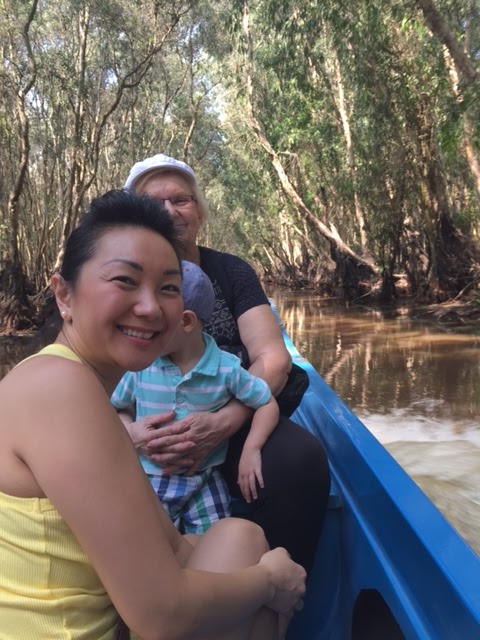
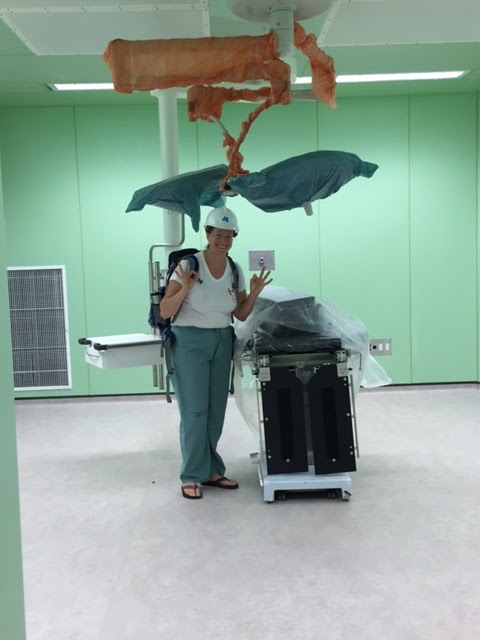
The post The Gift of Hope – By Sarah Painter first appeared on CHKV.]]>
https://www.chkv.org/blog/2016/07/25/the-gift-of-hope-by-sarah-painter/feed/ 0
Reflections on the Team – By Lisa Bryski https://www.chkv.org/blog/2016/03/03/reflections-on-the-team-by-lisa-bryski/ https://www.chkv.org/blog/2016/03/03/reflections-on-the-team-by-lisa-bryski/#respond Fri, 04 Mar 2016 05:23:00 +0000 What is it like to work with the CKHV 2016 group? It’s insane. Absolutely insane. I knew it would be trouble from the first group meeting when there was just as much laughter as there was discussion. Let me tell you a bit about our group. Chau is the fearless leader and why we are […]

The post Reflections on the Team – By Lisa Bryski first appeared on CHKV.]]>

What is it like to work with the CKHV 2016 group?


It’s insane. Absolutely insane. I knew it would be trouble from the first group meeting when there was just as much laughter as there was discussion. Let me tell you a bit about our group.

Chau is the fearless leader and why we are here in the first place. Her easy going attitude as the captain of this ship has let each member stay alive and thrive in this intense experience in a foreign country. There’s so much that could go wrong yet Chau is constantly at the helm, ready to steer the ship off the rocks. Don’t get me wrong. She is human. She has no sense of direction and needs her partner, Christian, to do the actual physical guiding when the group is headed somewhere. Many a times we’ve had to call her back from heading out the wrong door. Chau also gets motion sick very easily. We’ve been subject to a few loud retches in closed quarters. Still, we love Chau to bits. Her language interpretation and easy laughter has made this trip an amazing experience.


Christian is Chau’s husband, and like he says… Chau’s in charge but he’s in control. Christian is a human compass. We can be in the middle of nowhere, never having been there before, and he will lead us all in the right direction. You will be subject to off colour jokes while he’s doing it, but that just adds to the flavour. Christian is also the dad deposit for any child that is tired of walking. His everlasting good humour attitude has kept the group on even keel. We get the sense that ‘things will work out’ no matter what we’re dealing with during our travels. Christian is one of our cameramen and his equipment is huge! He’s often the instigator in getting us to try new experiences. We all have clean feet from his convincing us to let tiny fish give us a pedicure.


David “I need a haircut” Easton is on his second mission. He’s a group favourite and comes in for quite a bit of teasing over his hatred of a specific bridge in Can Tho. Dave’s a great straight man to Thu, Chau’s mom, though his own snappy comebacks are legendary. We all wait to hear what he’s got to say when Thu asks him a question. He’s also a cameraman with big equipment. He brings an individual twist to the uniform dress with his signature argyle sweater and nonconformist pants.


Stasa is a favourite both with the group and with the Vietnamese people we meet. Her ultra curly hair is a fascination for them and they often reach out a hand to touch her coif. She takes it with a smile and easy grace. Her easy laugh and enthusiasm is a boon for us. If there’s any food or experience to be shared, Stasa is an easy partner to hang with. You need Stasa on board for any snack run as she always finds the best stuff.


Aaron stirs up action. We’ve all got bruised shins from joining him in the bumper cars. He’s also part of the crew who won the kayak race and the three-legged race with Joanna. We suspect that he cheats a lot, considering he’s always winning things. We almost lost Aaron when he decided on an impromptu beer run during a traffic road block. We got him back, though, much to the group’s relief.    

Joanna has taught us all the extra verses to the Wheels on the Bus… trust us. You don’t want to know what the dads on the bus do. In our afternoon teaching demonstrations, she’s been a traffic accident victim, a heart attack, and a negligent mom. She started out good but left the stage briefly to ‘go get a coffee.’ We love her… dare we say it?… almost as much as Louis and Aaron do.


Anne started the whole group reading a book called “Turning Breath into Air.” It’s a book about a neurosurgery resident that dies of lung cancer. It’s been a bonding experience to read the same words and discuss the commonality of residency and death. As a counterpoint, Anne is usually in the middle of anything with laughter involved. She’s a great seatmate in any long-hours van trip, regaling the crowd with stories of her family and crazy new dog. She has a soft heart and we are suspicious that her carry-on to home will contain all the stray pups we’ve come across.    


Stephanie has taught the whole group the good, the bad, and the ugly about fertility. She’s had the most intense group sessions as the obstetricians at the conference refuse to leave her until the absolute end of each day. Stephanie is one of the moms of the group as well, making sure we all have mosquito spray, sunscreen or toilet paper. She’s encouraged the group to embrace the squat toilet and all its wonders.


Brent can walk anywhere and find anything in our host city. He’s also the only one with the claim to fame of making it to Ho Chi Minh city and back in 4 hours on a medical transport. We had bets on how long it would take and the prize was Brent giving a massage. Dave won. Brent’s easy going smile in face of hunger pangs is an inspiration to us all.


Hareishun has the best pirate head coverings, mostly in camouflage pattern. Don’t know what you call them… a babushka is what Dave suggests I say. He can eat. Man, can that guy eat. If there’s left over meals, it’s automatically assumed we should give it to Hareishun. He is one of the jogging crew, and has a soft heart for the pups he sees on the runs.    


Sarah is our blogger of the group. Without her, I don’t think we would have reflected on this experience as much or realized how much we mean to each other in such a short time. Her laughter is infectious and often keeps the giggling going. She’s one of the CPR Disco Dance Party crew with Lisa. Her station is often the noisiest from the laughter and fun learning her students enjoy.


Lisa (me): I don’t know what they make of me. I’m sure it’s something not repeatable here. <Written by Chau: Lisa’s positive energy and enthusiasm to embrace all things on this medical mission was heart-warming…not to mention her sassy quirkiness.>


Darlene and Thu are Chau’s moms. Tieng is Chau’s dad. They have made this tour a smooth running operation full of interesting things to do and great restaurants to eat at when we are off work. We love them to bits.


Gabriel, Sébastien and Louie: We call the children of the group the ‘Ambassadors of Emotion’. Their shrieks of laughter as they chase each other or their tears as they struggle with growing pains during a trip abroad are a “heart part” of our group. It’s been a joy to experience Vietnam through their eyes.


The post Reflections on the Team – By Lisa Bryski first appeared on CHKV.]]>
https://www.chkv.org/blog/2016/03/03/reflections-on-the-team-by-lisa-bryski/feed/ 0
Conference Talk – By Lisa Bryski https://www.chkv.org/blog/2016/03/03/conference-talk-by-lisa-bryski/ https://www.chkv.org/blog/2016/03/03/conference-talk-by-lisa-bryski/#respond Fri, 04 Mar 2016 04:46:00 +0000 It’s Week 2 of the CHKV Medical Mission to Vietnam. It’s been an intense but fun trip. The CHKV crew returns well rested from a weekend off and are ready for more teaching and learning. The staff here is a dedicated crew, and have thrown themselves whole heartedly into any teaching moments we’ve provided. The […]

The post Conference Talk – By Lisa Bryski first appeared on CHKV.]]>

It’s Week 2 of the CHKV Medical Mission to Vietnam. It’s been an intense but fun trip. The CHKV crew returns well rested from a weekend off and are ready for more teaching and learning. The staff here is a dedicated crew, and have thrown themselves whole heartedly into any teaching moments we’ve provided.

The teaching goes both ways though. We’ve been humbled by the hospital staff’s willingness to include us in their rounds about patients they are managing. Despite our obvious language barriers as Canadians, we have been treated with great respect when we try to understand or join in a medical discussion. It has taught us the true meaning of collegial professionalism and hosting.

The hospital staff have a wide range of cases to deal with. Their beds are full and their workload busy. Their resources must be doled out carefully to where the need is greatest and the greatest good can be achieved. It is a difficult job they do, much more difficult than what we are used to in Canada. They do it with great grace, however. Each family we have come across in our patient discussions is treated with respect and dignity despite the limited space and resources.

In our conference teaching sessions, it’s been a great privilege to watch the participants grow in both knowledge and in confidence. The first day was full of timid interactions by teachers and students alike. We’ve encouraged each other and have found how much fun it is to be together while we learn. It’s a true joy to see the students now run through resuscitation tasks and codes with confidence. They are also teaching each other as they continue to practice. It’s a great sign that the knowledge has taken, and they will continue to grow once we are gone.

We have only a couple of days left to continue to share learning with the conference participants. We’ve come to know them as individuals with great senses of humour and a strong thirst for knowledge. It will be tough to say goodbye on the final day. We hope to return some day for another conference. We’ve made so many connections and friends within this hospital.

The post Conference Talk – By Lisa Bryski first appeared on CHKV.]]>
https://www.chkv.org/blog/2016/03/03/conference-talk-by-lisa-bryski/feed/ 0
Pounding the Pavement in Long Xuyen – By Hareishun Shanmuganathan https://www.chkv.org/blog/2016/02/22/pounding-the-pavement-in-long-xuyen-by-hareishun-shanmuganathan/ https://www.chkv.org/blog/2016/02/22/pounding-the-pavement-in-long-xuyen-by-hareishun-shanmuganathan/#respond Mon, 22 Feb 2016 10:24:00 +0000 One of the greatest pleasures of travelling is to really immerse your self in the life of a city. Travelers often gravitate to key attractions on a map, but to me, the real joy is exploring the streets and the life contained within – an “urban safari”, if you will. The luxury of an air-conditioned […]

The post Pounding the Pavement in Long Xuyen – By Hareishun Shanmuganathan first appeared on CHKV.]]>


One of the greatest pleasures of travelling is to really immerse your self in the life of a city. Travelers often gravitate to key attractions on a map, but to me, the real joy is exploring the streets and the life contained within – an “urban safari”, if you will.


The luxury of an air-conditioned coach or a car will certainly allow you to cover far more ground, and see many more landmarks. However, it is a bubble that unfortunately insulates you from the sounds, the smells, and most importantly, the human interaction that you are immersed in at the street level.


A far better way is to get out on foot for a walk. Actually, why walk, when you can run? Some of my friends would argue, why run, when you can dance? Sadly, I am not that coordinated, or graceful, and trust me, running attracts you plenty of attention in Long Xuyen. Adding in some moves from “Grease” would probably not go over so well, but I digress.


The sun rises early here in Long Xuyen, and our medical mission starts at 0830 everyday. Some friends and I have been starting off our day with a morning run, which serves the dual purpose of getting the blood pumping to somnolent brains, and getting us more acquainted with the city and its residents.


We are usually well on our way by 0630, but Long Xuyen has been up and active for some time already. The roads are replete with motorbikes, buses, and vans. Shop owners have raised their shutters. “Street meat” is crackling on charcoal stoves, steaming Pho is being ladled into bowls, and mugs of iced coffees (with condensed milk!) sit invitingly on tabletops. All just waiting to be claimed. Our stomachs growl in protest, and we are tempted to break our gait, and stop for a breakfast, but we must press on!

Running for fitness and recreation appears to be a completely foreign concept to Long Xuyen’s residents. Heads turn, fingers are pointed, and toothy grins abound as our group strides by. The attention is by no means hostile, but rather a welcoming curiosity of we foreigners, clad in our moisture-wicking fabrics, seemingly rushing by, but with no apparent destination in mind.


Indeed, at the beginning of our week, that was definitely true. Our hotel was our nexus, and our runs largely consisted of tentative explorations of side streets, and navigating by feel to areas that appeared interesting. Midway through the week, our focus changed, and now the Long Xuyen market is our daily destination. Constructed in and around a large concrete and corrugated-iron roofed structure, the Long Xuyen market sits alongside the Hau River, and is your one-stop-shop for whatever you need for the day. Aging boat docks suggest a past where the bulk of Long Xuyen’s supplies arrived, courtesy of the Mekong Delta.


The market is a true buffet for the senses, and gives you the best insight into the hearts and minds of the citizens of Long Xuyen. The sweet scent of pineapples and bananas intermingle, and compete with the lush aroma of mint and lemon-grass. Live fish seem to play a bizarre game of Marco-Polo, all straining to escape their trays. Any escapee is quickly noticed by their sharp-eyed proprietor, who with deft hands, scoops up the rogue fish, and returns it to the tray to await its inevitable fate.


Live chickens in large wicker bags sit quietly, seemingly resigned to whatever the day may bring. Proud roosters, trapped by large, dome-shaped wire cages crow repeatedly, reminding us all that dawn has come, or perhaps, protesting their incarceration. Freshly slaughtered pigs have been brought to market and large shanks of meat are expertly butchered upon request. Nothing is wasted as even pig heads are carefully washed and scraped clean of residual hair, in preparation for sale (I’m told a pig head is a central feature in particularly special meals). “Poor Wilbur” – one of our friends remarked – it seems that here in Long Xuyen, Charlotte was not successful.


Here in the market, we western runners remain a curiosity, but are also potential customers. We are quickly embedded in the crowds of shoppers, browsing the ample stock available for sale. Motorcycles beep and slowly weave their way through the crowd, with the rider stopping periodically to purchase some goods – like a strange drive-through. As I walked by one leather-faced rider, he took a drag from his cigarette, gave me a quick nod, and then proceeded to squeeze my bicep. With another nod, and another puff, he puttered forward to another stall. I was vaguely aware that I was still in the “fresh meat” section of the market, so I wasn’t sure what to make of it, but chalked it up to curiosity, and perhaps a mild compliment.


By this point in the run, it’s hard not to ignore the piles of delicious fruit around us. The pineapples are too tempting to turn down, and we regularly indulge in an incredibly succulent mid-work out snack. Bartering with vendors is no easy task, and requires a smattering of Vietnamese, scribbles on hands, and gesturing to purchase a few bags of fruit. Word to the wise, most fruits appear to be sold by the kilogram, so gesturing with 5 fingers to indicate 5 individual fruit pieces will likely be interpreted as 5 kilograms by the joyful vendor.


Our return route back to the hotel takes us through some traffic islands and riverside parks that would not be out of place in Australia, Western Europe, or California. Parallel bars, overhead bars, a metal elliptical, and a puzzling torso-twisting device create an urban adult fitness-park that attracts a small, but dedicated group of retirees, school children, and adults at leisure. At another park, a group of middle-aged adults appear to have created a hacky sack out of a sturdy bag, and some rice, and are engaged in a back and forth that rivals the best the YOLO generation could muster. The travelling Western Circus continues its show as we engage in pull-ups, dips and core exercises, much to the delight of the Vietnamese around us. The atmosphere is supportive, as during one session, a gentleman (and fellow pull-up enthusiast) eagerly counted out my reps. I was more than happy to return the favour, and the exchanged grins spoke volumes of our mutual admiration for a good morning sweat.

The sidewalks nearest to the hotel are perhaps the most perilous part of the journey. Essentially a slalom course is in place, forcing you to dodge around carts, chairs and broken flagstones. Occasionally, you are forced to step out on the street to get around a barrier, or brave the swarm of motorbikes to cross the street. However, not to worry dear reader – the key is a sedate, predictable pace. Don’t jolt like a startled colt, but rather take the approach of a cud-chewing cow. Plod forward at a predictable pace, and the swarm will simply flow around you. Don’t mess with the trucks/buses though; you need to stay out of their way!


With our minds alert, and riding an endorphin high, a rooftop breakfast is a wonderful reward for our morning labours. A mouth-watering range of crepes, noodles, dim sum, pastries, and other hearty meals await us. Most of all, I crave a mug of steaming Vietnamese coffee and condensed milk. In the company of good friends and warm plates, not a soul among us feels exhausted, but rather invigorated, and we are all ready for another rewarding day with our Vietnamese hosts at An Giang Hospital.

The post Pounding the Pavement in Long Xuyen – By Hareishun Shanmuganathan first appeared on CHKV.]]>
https://www.chkv.org/blog/2016/02/22/pounding-the-pavement-in-long-xuyen-by-hareishun-shanmuganathan/feed/ 0