Deprecated: Creation of dynamic property quick_page_post_reds::$ppr_metaurl is deprecated in /home/chkvadmi/public_html/wp-content/plugins/quick-pagepost-redirect-plugin/page_post_redirect_plugin.php on line 97

Deprecated: Creation of dynamic property quick_page_post_reds::$pprshowcols is deprecated in /home/chkvadmi/public_html/wp-content/plugins/quick-pagepost-redirect-plugin/page_post_redirect_plugin.php on line 99

Deprecated: Creation of dynamic property quick_page_post_reds::$ppr_newwindow is deprecated in /home/chkvadmi/public_html/wp-content/plugins/quick-pagepost-redirect-plugin/page_post_redirect_plugin.php on line 1531
CHKV Blog | CHKV - Part 2
Categories
Uncategorized

Through the looking glass… – By Sarah Painter

The sunlight peeked through the curtains of my hotel window. Daytime had returned to Long Xuyen. I laid in bed undecided for a moment. Although we are now inextricably engaged in our free fall, there is still a subtle impulse in my mind to retreat. Each day unpredictable; bringing new challenges that cannot be identified or planned for. I contemplated how the day might unfold as I simultaneously attempted to will myself from the security of the hotel bed. Whether ready or not, the moment had arrived. 
With day one under our belts there was a new sense of comfort that I felt returning to the hospital. It was less unknown to me now. I have always taken solace in the fact that if you can survive day one of anything, then day two should theoretically be within your realm of capability. I showered and prepared for what would be our first official full day of teaching. Although I found myself more at ease than yesterday, there was a sense in the back of my mind that our experience would be completely different today. Instead of just standing in front of the mirror – this reflection of ourselves and how we perceive what we see – today we would peerthrough it. An opportunity to gain real perspective on the day-to-day world as it exists in the An Giang hospital.

Armed with learnings from the previous day’s lectures, we returned to the hospital. Small clusters of participants were hovering around the various skills stations that had been constructed the day before. Their inquisitiveness was evident as they sheepishly admired the various props, instruments, and machinery that covered each table: untenably curious but too cautious to explore further. I smiled as I watched them carefully peruse the stations. All would be revealed in due time.


Our morning started with Hareishun delivering a lecture on Pediatric Advanced Life Support and was followed by Stasa, who would present on the topic of pediatric sepsis. We were aware of the presence of many Pediatric physicians both in the physical audience and also by Telehealth. These presentations were undoubtedly highly anticipated.

One of the internal dialogues that took place within our team following yesterday’s presentations was that it was very difficult to get a sense of the crowd. Of course lecture always has this inherent challenge, however it was identified that many of us had questions about the way the hospital functioned and what types of resources were at practitioners’ disposal. Chau arranged a guided tour for Aaron, Joanna, Stephanie, Lisa, and myself during the pediatric lectures. It was a golden opportunity to gain perspective on the clinical environment before the afternoon started.    

We traveled from outpatient to inpatient areas with a physician who spoke some English. Communication was not easy, but our appetite to learn was insatiable. There was so much to grasp here. We visited some outpatient clinic areas and were subsequently escorted to the front of the hospital. An enormous crowd of people congested the seats in front of the registration area. There was overflow to the hallways and the outside of the building. I noticed a tall wooden sign commanding attention from the adjacent wall. It is a menu of procedures, diagnostics, and services with corresponding prices. Money is to be received first before care will occur. A social net of sorts catches the very poor; at what threshold of poverty and degree of coverage I am uncertain. Otherwise payment is out of pocket unless one is fortunate enough to afford or be eligible for insurance. Many of the same issues exist here as the US; including ineligibility if already ill. I imagine there is a large demographic that is not poor enough to qualify for basic government coverage but too poor to afford insurance and certainly not able to pay hospital bills without selling property and sinking deeper into the cycle of destitution. Medicine is not provided. If pharmaceuticals are required, the family takes the prescription to the pharmacy, fills it, and returns to the unit. Many medications are even administered by family. If you cannot afford it, you will not receive it. Food is not provided. Family presence is a constant as they provide much of the minute-to-minute physical care. I stare at the menu of prices and contemplate the complexities of the system. When we know illness is so intimately connected to poverty, how can so many disenfranchised people who need care the most receive it? The challenge for access here seems insurmountable for what I suspect is a significant portion of the population. I think of the many blessings of the Canadian health care system as we travel to our next stop. Even with all of the trials we face, our privilege of access to health care based on need and not ability to pay has never been so cherished in my heart. 

On our way to the ICU, we walked by an indoor area. Military style cots and mats were densely strewn all over the room. People scattered about; some lying lifelessly on the floor, others seated in solitude. There were illustrated educational posters on walls overtop peeling paint, no doubt the result of decades of relentless muggy heat. This is an area for family, we are told. A thick cloud of despair was suspended in the heavy, humid air. I could feel my heart sinking in my chest. 

We are led down a hallway and brought to a staging area outside of the ICU. No double HEPA filter doorways. No appealing table of hand sanitizer and mask with polite signage requesting due caution when visiting patients. We are cued to remove our own footwear. White plastic slip-on mules are offered to the group. Our new shoes carry us into the unit. I stand quietly and absorb my surroundings.


Twelve beds are packed tightly in this small room. There are no curtains here, no partitions. The heat is sweltering despite the fans and family members attempting to cool their loved ones with paper or other items. Compressible plastic bottles hang from the ceiling with IV tubing connected to arms. The hum of ventilators and the staccato of intubated bellies accent the room. People are looking up from their cots, interested in our presence. Despite the extraordinary humidity and human congestion in this space, we are all impressed. There is no odor, no mildew. The effort that is dedicated to keeping this space as clean as possible does not go unnoticed. We tour around and get a sense of what resources and capabilities are offered in this area. There are ten ventilators of various denomination, monitors (although not for every patient), dialysis, and many familiar medications. The hard work of the physicians and nurses is evident here. Despite insurmountable odds, they provide care as best as they are able within the walls of this 100-year-old building.


We briefly peek our heads into the surgical area. The post-op beds are mostly empty as the operating theatres are sterilized and not accepting curious visitors at this time. We drifted back down the stairs to visit the emergency area. Three of us in the group have emerg backgrounds and are keenly interested. We are delivered to a small room where naked metal gurneys are packed tightly. The sick are resting atop the cold, unforgiving surfaces. There are no monitors or defibrillators. In Vietnam the ER is used as a master triage area. Anyone requiring resuscitation or critical care intervention is carted to the intensive care unit. Otherwise there seems to be a method to sort all of these patients out and distribute them to various units, although what it is I cannot say. A few diagnostic machines are available such as an ultrasound and EKG that I presume produces 12 leads. A few people have IVs in situ that have likely been initiated here. There is so much here to discover however we are not always communicating with superb accuracy with the staff physicians and translators. Chau and Dr. Trung have plans to develop the emergency program here and Lisa Bryski will be presenting, in the coming days, on the history of the Emergency Medicine in the world and key concepts for developing a program. There is a great opportunity for advancements in this area and it is exciting to know that dialogue is already underway.

Our next stop is the pediatric intensive care unit. We are once again prompted to don white plastic shoes prior to being granted entry. There are about ten patients in this area. The oldest appears to be a toddler. However, in the mix are three or four premature infants. Some weigh only a few pounds, resting on their backs bundled in blankets, tiny nasal prongs taped to their miniature hats. We inquire about the age of the tiniest little one and discover that all were born at about 30 weeks’ gestation. There is no cardiac monitor for this tiniest babe as there is only one in this unit. Each bedside has a stool with a family member. Many appear to be mothers and grandmothers; seated at the bedside at all times, worried and waiting for the infants to get better. It is not clear what happens to babies that become orphaned by families who are unable to pay for lengthy and expensive stays in this area.


Our next stop is the obstetrical area. Our team includes an Obstetrician – Stephanie Johnston – and she is eager to see where this work takes place. At this point, I depart from the group as I needed to prepare for my presentation. Fear not dear followers – there will be many more reflections on the hospital in coming entries. 


I returned early to deliver my presentation. My topic is Basic Life Support and I’m planning to cover CPR, rescue breathing, and obstructed airway sequences highlighting the 2015 updates. Past experience has taught me that explaining critical elements such as high quality compressions, switching compressors, and minimizing interruptions are items that are better demonstrated than explained. Initially, I had considered asking audience members to come up and we would walk through a demonstration. The more I contemplated this, the more apparent it became that this plan would be far too unpredictable and potentially make participants uncomfortable. We determined as a group that the best approach would be to have CHKV members come to the front to show the team process. After I described the sequence, we announced our plan to the audience. It was incredible to see the response; Participants rising to their feet, cameras out attempting to film our little skit. We resumed our seats and I continued the presentation. By the end, I asked the crowd what a typical hospital response would look like. After a lengthy pause, a physician rose to his feet to comment that their team is comprised of physicians and nurses, and the BLS and ACLS processes are followed. Our team left the lecture considering what we could do to improve this process if it’s already in place.

****

Before we broke for lunch, we had a special mission. Gabriel attends Making Roots Montessori School and his class had collected new toys and clothes to distribute to the hospitalized children in An Giang. The goal of his project was to show the children in his class what it feels like to give to other underprivileged children in need. The pediatric intensive care was our first stop and then we moved on to other areas in the hospital where children are found.

Gabriel and team members offered small gifts, one by one, to these ailing little ones – an incredibly humbling experience. These families living the nightmare of a sick child in an ICU in Vietnam; the financial and emotional strain nearly unimaginable. How frustrating to offer nothing more than a toy. But in a way it was something… a simple act of kindness demonstrating that their suffering weighed on our hearts and minds.


I watched as Gabriel, a handsome boy just two years of age, came face to face with sick children his own age to learn the virtues of generosity and kindness. He will grow up to be just like his parents and grandparents, no doubt.

We dashed away for another expedited lunch as our skill stations would begin at 1:30 p.m. sharp. Upon our return, we moved into team formation and completed any finishing touches requiring our attention. Armed with meticulous plans, we were ready for the onslaught. However, what would happen to us this afternoon was very much a mystery. A few of us had remarked that it would be best to remain flexible and open to the unknown. Nothing could have prepared us for the tsunami that was bound for our unsuspecting team.


After everyone had returned to the auditorium a brief attempt was made to organize people into groups and communicate the process for rotation. To describe what happened next as a “free for all” would only scratch the surface. The entire afternoon was nearly riotesque in nature. Completely disproportioned groups assembled en masse to whatever station grabbed their interest despite the instructions. Translators mysteriously disappeared, swept away in a sea of irresistible curiosity driven by the wonders in store at stations to which they had not been assigned. Participants drifted in and out of stations as they saw fit, as though they were at a trade show window-shopping for what was most exciting to them on a moment-to-moment basis.

Team leaders at stations saw a variety of performances. The crowd was often an unknown mix. Many participants landed initially at the station that best suited their specialty. However, certain groups offered a diverse blend of physicians – seasoned and freshly-trained, with backgrounds specific to adult, pediatrics, and obstetrics.

Lisa and I had prepared numerous cases for our ACLS station. We had an overwhelming number of people flock to our area, perhaps fifteen instead of the four we had planned. Based on the mixed bag of participants, we decided to change our approach and start with a more basic case. We designated a team leader and a small group, and fed them instructions on the case through our translator.
As we would in Canada, we waited for the group process to unfold. An awkward period takes place, everyone looking at each other waiting for the other person to make the first move. It suddenly dawns on us that the process is unclear. Lisa and I abandon our plans and direct each person through the sequence. We had not anticipated this in our planning. This process in fact is completely foreign to them. How foolish of us to plan to teach assuming that education here is administered in the same method as at home. It suddenly became clear to us that our role over the next week will be to start from scratch.

The calamity of the afternoon thankfully drew to a close at 1600 hrs. I glanced around the room and sought out a few of my colleagues. We shared the common appearance of having aged ten years in about three hours. A cold beer on the rooftop was in order STAT.


But little did we know there was something much bigger in store…


Categories
Uncategorized

The Leap of Faith – By Sarah Painter


I awoke to the sound of the furious morning streets of Long Xuyen. There was a feeling in the air that was distinctly different from Ho Chi Minh City. I curiously peered out the window as the skies appeared to be gloomy; my mind curious about what the day had in store. To my surprise the false presence of rainy skies was endorsed by condensation on the double pane glass. A bright sun danced in the early morning sky over the bustling streets of the city. Today, as everyday, would be scorching.

I emerged from the shower refreshed and ready. My roommate Anne and I donned our official uniform for the next week and a half: a CHKV white t-shirt with green scrubs pants and sandals. I felt crisp, clean, and ready for a day of challenge and excitement; relishing in the feeling of this early morning sparkle. I have now learned how quickly the sticky Vietnamese heat can chip away at your sense of freshness. One mustn’t take these precious moments for granted.

Our team meets at the magnificent roof top restaurant for breakfast. Rows of tables await us under the spectacular daytime sky of Long Xuyen. An impressive buffet of food beckons our empty bellies. Trolling through the various dishes, one is to discover a variety of noodle dishes, spring rolls, rice gruel, and hardboiled eggs. How very unusual to have dinner for breakfast, I thought, as I perused the options. At the end of the line, a fellow in a dashing white uniform stood at attention in front of his petite cooking station. On command, fresh-to-order scrambled eggs would come to life in his frying pan. Adjacent, ready-made bowls of noodles, greens, sprouts, and meat eagerly awaiting a suitor to request it be filled with piping hot broth. How unanticipated it was for me to begin a Vietnamese love affair with hot pho for breakfast. There is something so wrong with this, yet simultaneously something so right. 

We gather in front of the hotel, enthusiastically awaiting instruction. Our journey today would take us to the An Giang Hospital. I felt a knot in my stomach, but different from yesterday. I sensed the subtle calm before the leap; the feeling I imagine you would experience just before leaving the edge of a cliff. There was no return now and in this danger there was freedom. Side by side, each one of us had committed to this adventure; and come what may, we would share the experience together. We bravely entered our vans and muscled our way through streets thickly lined with the busy, apportioned mopeds. Our adventure had truly just begun.

Our van narrowly passes a precarious gate that holds what appears to be a side entrance to the hospital. We have arrived.  Amidst congested narrow streets of moped traffic, street carts, and tiny vendors fanning grills filled with specialty food items, the intricate economic tapestry of the streets thrives in the mid-morning heat. Our van stopped just short of the gate, pedestrian foot traffic dense and unyielding. We disembark and enter the fray of the front of the hospital. We are met by the familiar faces of Dr. Trung Pham and Phat, a pharmacist who would be serving as a translator and guide during our time here. I stood on the walkway and took in my surroundings. People walking and seated everywhere, the occasional metal gurney carting seemingly lifeless individuals to and fro. There was a method to this madness that my naïve eyes were not yet able to discern. I had arrived to teach, but standing in the eye of this storm, it suddenly struck me that I was here so much more to learn.

We are escorted to the top floor of the main building. A tiny elevator furiously hauling people from bottom to top and down again beside a staircase – our options for ascension. In the spirit of taking one for the team, several others and myself opted for the stairs. My early morning shower felt miles away from me now, as I hauled my sticky physique up five flights of stairs. Our reward found at the top of this mountain was a large, air-conditioned theatre. What bliss was found here in our classroom.


Rows upon rows of eager participants already in chairs awaited our arrival. We are ushered to the front of the room where our seats have been reserved for us. Bottles of water meticulously positioned in front of each of our chairs. Details such as these are the grand gestures of gratitude. Easily missed, but incredibly resonant. We are being welcomed by people eager for the opportunity to learn. I can feel the discomfort caused by being in a new place and tackling a new challenge slowly becoming disarmed. We are among friends here and we accept the uncertainty and incredible opportunity of this adventure together.


As I sit and watch the final preparations for the morning session coming together, I can see that there are many people orchestrating an impressive Telehealth arena filled with numerous rural hospitals calling in so they too can partake of the learning. Clearly the good news of our symposium had spread far and wide. Dr. Trung Pham and his hospital had put much work into ensuring other providers were able to access this gift of free education. Unbeknownst to us before our arrival, all participants were to complete a pre- and post-test as part of this event, indicating how seriously this opportunity was being taken.

An opening ceremony commences once we are organized into our seats. Ambassadors of the hospital and CHKV declared gracious meaningful messages: our hosts humbly welcoming the team and CHKV, equally unassuming, accepting with gratitude. Once the speeches were complete, the entire team was invited on stage for photographs with various teams of providers from Vietnam.

We are whisked away from the auditorium by an eager team of physicians excited to show us the new hospital. Dr. Trung tells us the facility that they currently occupy is more than 100 years old. Their new hospital is constructed, nearly ready, with a moving date in March 2016.


We arrive at the spectacular structure, standing tall in its splendour over the crowded streets. As we file out of the van we are offered hard hats, as this is still very much a site of construction. We enter the building into an atrium of sorts. There are rows of chairs and wickets with bank teller style glass with fenestrations for exchanges of voice and currency. In Vietnam, the emergency area is completely different from what we are familiar with in Canada. The purpose of this entrance way is to register and collect payment. Only a few beds can be found juxtaposed to the registration area. There are limited resources here as it serves as a master triage area, patients ultimately being decanted to other areas of the hospital for any type of care, including emergency interventions.

The new hospital is an impressive ten stories in stature. It will hold 600 beds in total.  The old hospital will stand to function as a Women’s Hospital with 400 beds. What is interesting is that the old hospital currently has to hold all 1000 beds, a testament to the need for greater capacity and incredible strain on the current facility.


The second floor boasts an extraordinary 28 bed intensive care area with pods of four beds under the daylight glow of the massive picture windows. Florence Nightingale often referenced the critical importance of natural light and fresh air to assist in one’s restoration of health. Impressive to me was this principle alive in living colour in this modern ICU. 


From there we are toured through a robust 16-theatre surgical area, post operative suites, general ward areas, and a stunning high rise roof area where a charming walkway leads you to a modern education auditorium, reminding me of facilities that we would have in Canada.


Brent and I are aware that there is a helipad and inquire if we might visit, initially believing it is on the roof. Dr. Trung explains that this was the initial plan, however the building structure could not accommodate it, so it was made ground-level. Still incredibly impressed, we are escorted to the site. Dr. Trung explains that there is currently no helicopter emergency medical service in Vietnam as it is very expensive. However, the new hospital was constructed with the dream of one day realizing this time and lifesaving possibility. What incredible foresight.


Sand had drifted briskly through our hourglass and it is realized that we are running out of time for lunch. Motivated by our need to set up tomorrow’s skill stations as well as an aggressive start time of 1:30pm sharp, we find a mall with a food court and are mobilized through the process of ordering and money-exchange by the steadying hand of Thu.

We quickly return to our auditorium and set up our stations.


Stasa and Hareishun prepare pediatric sepsis and trauma cases:


Dave and Aaron assemble an ultrasound guided central line insertion and Advanced Trauma Life Support station:    


Christian and Brent arrange an incredible airway management station featuring opportunities to performing basic manoeuvres, insertion of endotracheal tubes and laryngeal mask airways, and hands on simulated experience for surgical airways (open and melker techniques):


Chau and Anne convene with two more ultrasounds to facilitate a station for FAST and bone, joint sonography:


Stephanie and Joanna organize a gynecology and obstetrical area where they will lead cases for postpartum hemorrhage, eclampsia, child birth with focus on difficult vaginal deliveries (i.e. shoulder dystocia, breech), and IUD insertion.


Lisa and I prepare for an Advanced Cardiac Life Support station with pre-planned cases for pulseless, tachycardic, and bradycardic patients.

After our furious prep work was completed, it was time to begin presentations.


Chau had bravely planned to go first as there were many moving parts. A main screen housed the English PowerPoint slides/video. There were two screens bookending the large one with the translated version of the presentation. Simultaneous translation would occur to clarify all statements made by the presenters. In addition to all of this, the Telehealth system would broadcast live to enthusiastic learners at other hospitals. Even with as much planning as we had done, we were all anticipating that there would be tremendous learning from this afternoon’s proceedings.


Lectures ensued with the exciting awkwardness that we had all anticipated. Our English presentations on the main laptop would not show our presenter notes, so we also needed to have our own computers to ensure that no information was left undelivered. A designated staff member was positioned at a table facing the screens whose role was to anticipate the changing of English slides and attempt to synchronize the Vietnamese slides. All of this activity is punctuated by the awkward cadence of the stop and start presenter narrative, permitting a mysterious Vietnamese translation to bellow out over the crowd, decoding the English into a more familiar version for participants.   


Nothing could have prepared us for the folly of the afternoon. We had found ourselves at the interface of our separate worlds, attempting clumsily to somehow find a way to fuse our cosmoses together. With each passing presentation, we learned new things and subsequently shed awkward layers. First Chau, then Brent and Anne, each skilled presenter uncovering more and more about the process and how to make it effective. By our final presentation, we had slowly developed momentum and cadence. An encouraging sign of hope and promise for our first full day tomorrow.


An exhilarated but exhausted team returned to the hotel by late afternoon. Our reward was a beautiful evening stroll for a delicious Korean BBQ dinner. It was truly an occasion to eat, drink, and be merry, celebrating in the success of the day.

Resting in bed at night, I found myself thinking about the entirety of the day and the journey up to this point. It was daunting to know that we would be charging into the unknown. It gave rise to the instinct of retreat that many of us feel when success is not certain. But seldom do we find reward by turning away from challenge.

Sometimes in life, we find ourselves at the edge of a cliff. We are vulnerable, anxious, uncertain of what the future may bring. We consider turning back to preserve our safety and comfort. We believe we are in the wrong place and long for the familiarity of home. We stand with our path laid before us but our ability to fly confounded by the powerful presence of doubt. But on days like today, if we can manage to will ourselves over this ledge, our leap of faith opens us to possibility of flight.


Categories
Uncategorized

The Two-Wheeled Workers of Long Xuyen – By Hareishun Shanmuganathan

Long Xuyen starts its day early. Depending on where you are, it may be the crowing of roosters, it may be the pops and snaps of a charcoal street oven, or the calls of street vendors advertising their wares. However, no matter where you are, the high revolution engines of motorbikes generate a buzzing cacophony, like a giant beehive stirring to life.


I took an early morning jaunt with some friends through the streets and alleys of Long Xuyen today, and despite the early morning hours, the “hive” was intensely active at 0630. Young men and women, hustling off to work. Vendors, hauling their goods. Children, sharply dressed in their uniforms, were hurriedly being ferried to school on time.
At the centre of all of these activities, is the humble motorbike. It is the van, the family sedan, and the school bus. Whether jammed together, seemingly handlebar-to-handlebar on main thoroughfares, or deftly weaving their way through the alleys of the shanty towns, the motorbike is the “worker bee” for this hive. However, these little machines are far from anonymous. Each will make itself heard as its rider will regularly pump the horn to announce its presence to the other vehicles vying for precious road space. Every so often, a larger beast, such as a truck or bus, will emit a much deeper grunt, and will simply muscle its way through the mass of traffic. The poor little motorbikes have no choice but to give way lest they be crushed by these clumsy, demanding vehicles.

There is a method to this early morning madness. The temperature quickly reaches a stifling intensity at mid-day, so the locals attempt to complete as many tasks as possible, so that they can take a little break midday when the sun is at its zenith. At this time, the hive seemingly quiets down, the buzzing din settles, and streets appear relatively empty. Here again, the unassuming motorbike serves a purpose. Kickstands deployed, and under a nearby stall, or tree, the motorbike serves as a convenient bed for its weary and overheated rider to catch a midday snooze.


Once the sun sets, the hive starts up again, and with greater intensity than the morning. Glowing headlights fill the street, neon signs are garishly ablaze, and rapid-fire pop music (K-Pop? J-Pop? Maybe it’s V-Pop) attempts to draw would-be consumers into stores. The population has been recharged by their midday break, and are ready for some action.
As expected, the motorbike tirelessly ferries Long Xuyen’s residents on their nocturnal adventures. The night makes these little creatures even more vocal, and the collective beeps of their horns at times drown out the buzz of their engines. The labours of the day, and of Long Xuyen’s little worker bees, has resulted in the unmistakable, and potent scent of two-stroke engine exhaust, which saturates the air, like some sort of over-powering cologne. Walking the streets of Long Xuyen at night reveals frenetic activity, but not oriented towards work, but towards play. An early morning start is looming, and labours of the next day draw close, so while rest will be key, unwinding with a warm bowl of Pho, with a side of rapid-fire conversation will ensure that the city’s residents will be ready to face the next day’s challenges.


Bellies full, and senses satiated, Long Xuyen’s residents head home, courtesy of their tireless motorbikes. Children, secure in their parents’ arms, are often lulled to sleep by the comforting whine and cadence of their family’s motorbike – a mechanical lullaby if you will.

Long Xuyen quiets down as midnight passes, but as most slip off to bed, and the streets once again empty, the city is never entirely silent. Motorbikes give Long Xuyen a constant, albeit a softer, and more sedate buzz, as they keep the city functioning throughout the night.


It appears that there is rest for the weary, and the wicked alike, but never for the wheeled. The humble motorbike’s labours are never complete in Long Xuyen.
Categories
Uncategorized

Dragons, Snakes, Mopeds, and Roses – By Sarah Painter


We awake from our brief reprieve in order to take advantage of the free hotel breakfast whose non-negotiable close time is 10:00 a.m. Today would be our first official day in Vietnam. After our meal, we assemble in the hotel lobby as a group awaiting the instructions for the day. The plan would be to spend the first few hours scouring the city, exploring the market just down the street or heading to the French quarter to view some historic sites.

Initially, we were all market-bound to see what excitement was in store. Heading into the experience, I figured that I already knew how I’d feel. I understand that the purpose of such an area of commerce is to bargain for deals. But how, I thought, could I possibly come to a country that has such need and haggle to get a price down from cheap to nearly free, when I have such an abundance of resources? Surely I would need to be very generous.

Well, ladies and gentlemen, allow me to introduce you to the Cho Ben Thanh Market. The hustle is in full swing here, let me tell you.

Under the strict instructions of our group leads, we are encouraged to remain in at least a pairs and to protect our valuables. I branch off with my roommate Stasa to explore. I had quite of bit of money on hand and was prepared to shop ‘til I drop. However, in the mania of the market, I suddenly felt very intimidated. It is a truly a wild sight. Hot and humid like a pressure cooker, crowded with people and kiosks, workers in full denim jeans, socks and long-sleeved shirts serving giant vats of steaming hot soup. Never in my life have I seen such a place.


As we make our way through the crowded aisles, eager people at each little kiosk attempt to halt us, hoping to tantalize us with their merchandise and the promise of ‘best price for you’. I decide quickly that I had better hold off on purchasing for a few reasons:    

  • It is very difficult to determine what the price is in Canadian dollars as 16,000VND = $1CAD, so definitely lots of opportunities for screw ups
  • I am easily pressured in situations that involve math that I can’t figure out on the spot
  • I’m not always sure what people are saying to me
  • I’m suspicious that I may not always be getting the actual ‘best priceI have already been bamboozled into paying $30USD above our group rate by a very persuasive hotel staff member this morning so my confidence is low


Essentially, I felt very exposed walking through the market; like a fool prime for the taking. I figured I better wait until next time.    


This is maybe the difference of the market that I hadn’t anticipated. Bargaining here is less about trying to take advantage of someone less fortunate, and more about trying not to get taken advantage of. Certainly the market kiosk owners are after the best price for their merchandise. And why wouldn’t they be? I decided that overall, I need to return to this place with less of a bleeding heart and more cunning related to currency conversion and bargaining tactics.

Meanwhile, Brent, Hareishun and Stephanie decided to go for a hunt for history and adventure. They walked through the French quarter and past the Notre Dame Cathedral.  After wandering the streets, they arrived at their targeted destination – the Pho Binh Noodle House.  It seemed like a humble spot that could easily be missed, but was mentioned in Lonely Planet, prompting their journey.

The noodle house was the secret meeting place for the Vietnamese Communist Party where the revolution was planned in 1968.  The upper level is a museum dedicated to the men who gave their lives during the revolution and the men who planned the revolution.  The noodle house is still owned by a family member affiliated with the revolution.

From there they quickly walked back towards the hotel.  During their journey, they got to walk past Independence Hall where the prime minister lived prior to being conquered by the Communist Party. A very busy couple of hours considering they were on foot the entire time, dodging unyielding mopeds while covering serious distance.

The entire group returns to the hotel and boards the bus to head to the Binh Quoi Tourist Village. Unbeknownst to us at the time, we are embarking on more of an adventure than we thought. This park area is a luscious green space with flowers, exotic trees, and activities for all.


We climbed bridges made of skinny sticks over green ponds that definitely would not be allowed in Canada…

Enjoyed sugar cane drinks…


Swung with friends…

Spent time in beautiful little huts around the pond…

Even had little naps…

The Vietnamese folks sure enjoyed taking Brent and Harieshun’s picture while they slept.
Now luckily for us, this afternoon in the park was about to turn into a full-fledged celebration. Occasionally on weekends and then on New Year’s – which had just passed – for the low price of 27000 VND you can tour around a 70 station buffet of Vietnamese cuisine enjoyed in a seated area in the park.


It was fabulous. Incredible, authentic Vietnamese food everywhere you turned. It even included some delicacy dishes such as Ot (snails) and Hot Vit Lon (half hatched duck eggs).

Here is Christian enjoying both!
Much to our surprise, the evening didn’t finish here…

A traditional dance with dragons began. It was an amazing spectacle of acrobatics and thermodynamics (for the guys inside the costumes).

Dancing together…
And dancing on a fairly precarious table-stage…
 

Children and adults offer the dragons money in red envelopes by feeding them, which in turn grants a new year filled with good fortune and prosperity.   

Even little Sébastien was brave enough to feed a dragon!

And the party continued until the show was over!


And by the time we arrived at the end of our evening, everyone was completely exhausted and ready for bed.

Except for the guys who napped in the park. They enjoyed the Saturday night lights on the roof top of the hotel with a cold beer in hand.
 ****
We awoke refreshed the next morning with a day of travel ahead. Many of us had opted for an early bedtime complete with a lazy morning and breakfast at a medium pace. But not our fearless and motivated trio: Steph, Brent, and Hareishun! Off they went for an early morning tourist run.  They jogged through the French quarter, saw the psychedelic helipad and dance club (still not certain who gets to land there – it’s a hell of a way to make an entrance to a night club).  Along the Saigon River they traveled to see the abundance of boat traffic.  During the trip back, they spotted the US Embassy, which is heavily surrounded with parking/safety pylons/barricades to avoid approaching with a car.  It is in the same location as it was in the 1960s.  Unfortunately, they weren’t able to get a view as it is still surrounded by high walls with barbed wire.  Their early morning jump-start capped-off perfectly with iced coffee at the local market. The early bird sure catches the worm!

Our team reassembled and we started our journey to take us to Long Xuyen, where our teaching symposium would be held.

We managed to track down another friend on our way out of Ho Chi Minh City.

Please welcome Dr. Dave Easton – Adult Intensivist.

After a couple of hours of driving we made a little pit stop… at the most restful and relaxing location possible…

The Snake Farm!!

This unusual and interesting attraction boasts numerous snakes in a variety of areas, as well as a zoo-type experience complete with animals native to the area, as well as animals that are native to other countries (like deer, wolverines, bears with huge amounts of hair). I’m not totally sure how some of these guys found their way here.

I admit that I stopped taking pictures after being pooped on – not once but two times within fifteen minutes. I’m quite sure it was at the hands of a dainty little bird in the trees. That being said, I’m really not into anonymous bomb-drops of unidentified Vietnamese birds. Everyone keeps telling me it’s lucky. I remain unconvinced.

Following an hour spent taking in the marvels of the snake farm in the baking hot sun made the group crave one thing, and one thing only – HOT SOUP FOR LUNCH!

We file back into the bus for the long road to Long Xuyen. You would think that leaving a major city and driving to another site would thin the traffic. The city centres have incredibly thick volumes of moped traffic, steady at all hours. Weaving in and out – every nook and cranny that can narrowly accommodate their dimensions – they are there. A manic tapestry of little horns and big horns used as constant communication of your location and intentions. You would think that this would be less and less so as you leave a city centre. I was fascinated that it is more of a constant state. All the way to Long Xuyen the bus rumbled along registering approximately 1-2 beeps of horn every 1-2 seconds, politely encouraging the little mopeds to give way.

Perhaps my favourite part of the day was loading our bus on to the ferry. There were three dense, slow-moving lines that lead to the two-dock ferry loading area. Thankfully, our group “knows somebody who knows somebody who knows somebody” and we got into the fastest moving line.

Our giant bus lumbered its way onto the tiny little ferry and we were (as always) surrounded by dozens of tiny mopeds, carrying anywhere from 1-5 people.


We had the good fortune of watching the sun setting over the water on our brief and exotic ferry ride.

We arrive at our final destination at approximately 7:00 p.m. We have new friends waiting for us at the hotel. Please welcome:

Dr. Joanna Webb – Family Medicine Physician; Dr. Aaron Webb – Emergency Resident; and their son, Louie.


Weary and stiff from our lengthy road travels, we disembark the bus to a beautiful, thoughtful, Valentine’s Day surprise…

Dr. Rang Nguyen (pictured above) and Dr. Trung Pham and his team awaiting our arrival, with beautiful, single red roses in hand for each of us.

I suddenly have a moment of realization.

Over the past couple of days, we have grown as a group and enjoyed so much fun together. Today marked a change in our story as we have arrived at the city where we will begin our symposium. This is our purpose for coming here, but it becomes so easy to fall into a certain frame. I felt reluctance for the following day. We would be working. I am nervous as I have never taught non-English speaking people in a foreign country. I had slowly started to change my focus over the past couple of days, thinking more about myself and my own comfort… unconsciously and without recognition.

Stepping off the bus and being met by a group of smiling, excited, and grateful physicians and team members put everything into perspective. This is what I had come here for. Although I was on the brink of doing something that I had never done before and was plagued by the uncertainty of exiting my comfort zone, the force that was even stronger was the realization that this act was one of meaning. We have arrived to assist health care providers in a developing country learn how to help more people in new ways. As much as this is a mission of challenge, it is also a mission of hope and possibility. This beautiful Valentine’s Day gesture is a reminder of the incredible bonds that can be created when we transcend our own personal barriers to make meaningful connections with people from other walks of life.

I held my precious red rose in my hand and watched as our group intertwined with theirs.
This is the start of something big.

I can feel it.
Categories
Uncategorized

The CHKV Amazing Race – By Sarah Painter


The day had finally arrived and a tired but excited group of friends, old and new, gathered at the Richardson Airport at 4:30 a.m. What is even more impressive than our ability to adhere to such an early morning start was the number of pieces of luggage in tow, each person carrying one bag with our personal belongings and another filled with medical equipment needed for our symposium. The months leading up to this day had been busy back and forth compiling a list with the necessary equipment for our mission under the careful coordination of Chau Pham, who is our team lead. The week before our departure, it was determined how we could package these items and who would take which suitcase. Now our team members had assembled at the airport planning to cross international borders with suitcases containing airway heads, ultrasounds, cardiac monitors, and pelvic manikins for simulated childbirth – all very exciting things to explain to customs officers once we arrive. As we checked our bags, Chau flew from counter to counter, ensuring there were no issues with our check-in and applying a generous number of ‘fragile’ stickers to ensure gentle handling of our precious cargo.

We successfully check in and pass through security. Before our first leg of the race – Winnipeg to Vancouver – we caffeinate appropriately and gather for the first group picture of our journey.


And maybe this is a good time to introduce our team!
From left to right:
Tieng Pham – Father of Chau Pham
Darlene Lindsay – Mission Coordinator, Mother of Chau Pham
Thu Pham – Mission Coordinator, Mother of Chau Pham
Sébastien La Rivière – son of Chau and Christian La Rivière (CLR)
Dr. Chau Pham – Emergency Physician, Team Lead
Dr. Christian La Rivière – Emergency, Palliaitve Care Physcian
Gabriel La Rivière – son of Chau and CLR
Dr. Stephanie Johnston – Obstetrician
Dr. Lisa Bryski – Emergency Physician
Dr. Anne Sutherland – Emergency Resident
Brent Bekiaris – Advanced Care Paramedic STARS
(me) Sarah Painter – Registered Nurse STARS, Children’s ER
Dr. Stasa Veroukis – Pediatric Intensivist
Now please keep in mind that this is not even the whole team! There will be new friends joining us over the next few days whom I will introduce as they arrive.

Our 30-hour odyssey begins as we board the plane and head to the west coast. The first part of this trip is the shortest. It seems bizarre to me that the flight to Vancouver normally seems very lengthy when I’m just traveling within Canada. However, on this morning, it is a 2.5-hour portion of our total journey. I know that it is a lay-up compared to what lies ahead.

As our plane arrives at our destination, I observe our Canadian custom of disembarking the flight row by row with calmness and due procedure. I find myself thinking that this is the last airplane that I will leave in this manner until I return back home.

After arriving in Vancouver, we assemble at our next gate and await the flight to Hong Kong airport.

And we pick up a new friend.

Ladies and Gentlemen – please welcome Dr. Hareishun Shanmuganathan – Emergency Paediatrics Physician    

And off we go to Hong Kong! Just a brief 13-hour flight. Very straight forward.  An interesting blend of needing to sleep, hoping to begin to adjust to the massive time change, eating sodium-rich airline food, trying to avoid significant water intake in order to prevent excessive disruptions to neighbours, and ongoing concern about DVTs and PEs. Man does time ever fly when you’re having fun.

Once safely arrived at our destination, we have a few hours to enjoy the Hong Kong airport – an impressive structure with shopping, restaurants, and fun for all. Our group disperses for a short time as we tend to our own individual needs. I already knew what I would be doing long before arriving.

In Hong Kong, weary travelers are able to pay money for the gift of a shower. This was a tip that I had picked up on my way to Australia a couple of years ago. “A luxury once enjoyed becomes necessity” I believe the saying goes. After more than 24 hours of transit time, I felt it was absolutely necessary to pursue. Stephanie agrees that she too is interested in the life-changing properties of a shower and we charge through the airport searching for this Holy Grail. We locate the Plaza Premium Plus area with the grand hopes of rejuvenation before us. Indeed, they still offered this service. The menu states a cost of $200 HK. I ask the man at the counter how many US dollars that would be. He thinks about it quite a bit and replies $20. We all agree that this is a fair price, but he is now motioning to another woman who seems to work here. I lean over to Steph and mention that $20 is probably the maximum that I’d pay for such luxury. Any more than that and I’d feel it’s not worth it. The woman approaches the counter and corrects the price – it is actually $27USD. Damn it. But I couldn’t bear to part with my dream. I had already imagined myself there in my mind. We both pay the fee and head to our lovely little private bathroom. Money is no object when your destiny is on the line.

Ladies and Gentlemen, a $27 USD shower in the Hong Kong Airport features the following benefits: 

  • Being alone for an entire 30-45 minutes
  • An exquisite rain shower head
  • Toiletries including a comb, single use toothbrush, soap, and shampoo
  • Fresh towels
  • A bottle of water
  • Sanity

Do you remember those Herbal Essences commercials from back in the day?


Yeah that was basically me.

After our rejuvenating showers, we found a restaurant and capped off the experience with a curry noodle soup. Level of relaxation: maximum.


Our final leg of the race was a relatively short zip over to Ho Chi Minh City, a total of 2.5 hours. Compared to the last flight, this was a slam-dunk for our group.


Let’s hear it for our traveling babes!! I nominate them as MVPs!


We arrive in Vietnam with luck on our side, as all luggage has made it to our final destination. We separate it into medical and personal, and proceed to the exit.

Walking into a wall of humid air, we find a pleasant group of family and friends of Chau and her parents. They have worked incredibly hard on their end to facilitate our journey. There are two buses waiting. One accompanied by Dr. Trung Pham (no relation to Chau et al.) – the Medical Director of the hospital where our medical symposium will be held in Long Xuyen. The other is our group’s bus with a driver who will be transporting us around Vietnam throughout the next couple of weeks. Part of this group is the gracious Thanh Nguyen, long time friend of Thu Pham and retired teacher. Thanh leads the Retired Teacher’s Association of An Giang, which is the direct lead of CHKV in Vietnam. Thanh and others oversee the application process for families of children hoping for sponsorship, organize the bicycle donation, and provide administration to the charity here in Vietnam. There has been an overwhelming amount of work done on this side to help our mission come to this country. We are very grateful for these contributions.

After the luggage has been loaded, our group of jet-lagged teammates piles onto the bus. It is 2:00 a.m. in Ho Chi Minh City. It is 11:00 a.m. in Winnipeg – 1 day. We have been traveling for 30 hours. It’s time for bed.

We make our way to our first hotel to check in for the night. The trip was perfection up to this point, so what would an international journey be without a medium-sized debacle? There had been some confusion about our arrival date at the hotel. They were quite surprised to see us and the inn was full, as they say. After some expert problem solving, we head back to the bus and trek onwards to an alternate destination. No one cried, not even the babies.

In bed by 3:00 a.m. A photo finish indeed.

No telling what fun tomorrow will bring.


Categories
Uncategorized

You’ve Got Mail

mail

I almost didn’t come on this trip…

Interesting that I find myself on the cusp of the long journey to Vietnam. It’s hard to believe that the day is upon me. As I begin to gather my things and prepare for my time away from home, I find myself reflecting on how it came to be that I arrived here.

My 2016 began with an incredible bang that I had long planned for: An adventurous visit to Whistler-Blackcomb for snowboarding and then virtually straight out to the sunny beaches of Mexico for the wedding of good friends. Even before January arrived, I was already prepared for the fun and excessiveness that awaited me. I had planned it for months. It was going to be about my own personal enjoyment and me. I looked forward to it.

In July, I received an invitation to join a medical mission for a charity named Canadians Helping Kids in Vietnam (CHKV). They would be traveling to the country in February for just slightly shy of three weeks. The list of team members was both familiar and impressive, many of them colleagues I have practiced alongside in the emergency rooms of Winnipeg. The goals of the trip were diverse, but most energy focused on providing a robust educational symposium for the physicians and nurses at the hospital in Long Xuyen.

I recall looking at the email with a knot in my stomach. At first I was wondering how I could afford such a journey since the organization is grassroots with all members finding their own way financially in order to ensure that other proceeds from fundraising are directed towards maximizing assistance to the country. The more I thought about it, the more it became clear that there were other protests plaguing my mind, reactions that were somehow darker. I had hoped to go on two trips to the mountains this year. I didn’t think I’d be able to do that if I went to Vietnam. Something would have to go. I was disappointed that I would need to make a concession in order to entertain this opportunity. I don’t like the feeling of sacrifice.

I felt suddenly ashamed of this thought…

The longer I contemplated my decision, the more thoughtful I became. I realized how embarrassed I was about my internal reaction to this trip. How could I have become so selfish that I would pass up an opportunity to help others so that I could go on yet another lavish vacation?

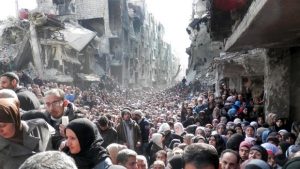
Syrian Refugee Crisis

I started to think about the world that we live in. I am an avid consumer of news media and follow international affairs closely. I am routinely discouraged, saddened, and concerned at the state of humanity. I sit in the comfort of my home while I listen to the World at Six on CBC radio and I think about how the world should be a better place than it is.

And so here I find myself in front of this email inviting me to participate in a medical mission with feelings of indecisiveness. An opportunity to do something different and meaningful lay before me. Yet I am paralyzed.

I am out of my comfort zone.

How easy it is to sit back and expect that the world be a different place. What a convenient concept for a person from a first world country; this notion that I want the world to be better yet should come at no personal cost to me in particular. In a world ravaged by inequality, we all play a role whether we are able to recognize it or not. There is white that answers black.  Day and night. A yin and a yang. There is privilege and there is disadvantage. One does not exist without the other. These are not mutually exclusive concepts. Somewhere along the line my advantage translates into someone else’s deprivation, because my life is not in isolation from others. This is the concept that has evaded my first world mind. I have led myself astray because at some point in time I became blind to my own privilege. My sense of entitlement to a life of good fortune has become insidious despite my lip service to the notion that it is an unbecoming way to view my place in the world.

World Scales

I started to wonder what the world would be like if entitlement and privilege translated into a profound need to create balance…

Perhaps the remedy to inequality is grand gestures to even the scales. And if this is the case, it is incumbent on me to feel a responsibility to do so.

So I made a choice. I chose to be a different person than the one who initially opened the email.

I said yes.

As I sent my response I could feel myself stepping outside of my own safe boundaries, understanding that I had agreed to embark on a journey that has the capacity to change me as a person. I started to reflect on trips from years past that had me step outside these walls and challenge myself to grow in uncomfortable ways. As scared and uncertain as I have been in the past to do this, I have always found that it is infinitely more valuable than traveling my familiar roads of comfort.

Maybe in life, opportunities that you need the most are the ones that appear out of the blue in your inbox when you least expect it.

This article originally posted at http://chkv2016.blogspot.ca/2016/02/youve-got-mail.html